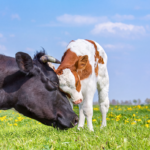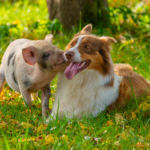
In July 2026, the Church of England published Hope for All Creation, a major new teaching document on the environmental crises. In this article Sarx Founder Daryl Booth welcomes its striking theology of animals while asking whether the Church is prepared to follow that theology into the realities of intensive farming.
At a recent Idler Festival in Hampstead, I was privileged to hear Rowan Williams discuss his new book, Solidarity. He spoke of solidarity as requiring us to notice whose voices are absent from our shared life and why they are not being heard. Afterwards, I asked him whether this concern might extend beyond human communities to animals whose suffering is so often hidden out of view. Raising those famous eyebrows, he agreed and described the omission of animal life from our thinking about solidarity as ‘an absence for us’.
This exchange serendipitously occurred one day before the Church of England’s major new teaching document, Hope for All Creation, was formally presented to Synod. Perhaps one of the strongest official Church of England affirmations of animals in recent years, this striking document goes some distance towards remedying this absence. Its theological account of animals is rich and substantial. In its claim that ‘all creatures and all elements of creation have a direct relationship to their Creator and matter to God in their own right’, it rejects the assumption that animals matter only because they serve human interests. Their worth, ‘not measured by their utility or aesthetic value to human beings’, rests in their identity as creatures created, sustained and delighted in by God.
Its discussion of the Noahic covenant presents animals as fellow recipients of God’s covenantal promise. Its account of creation’s ultimate destiny is equally striking. As part of Christ’s reconciliation of all things, humanity’s destiny is described as lying ‘with other animals, plants and forms of life in a reconciled, renewed and liberated creation’. Together, these claims challenge versions of Christianity that treat animals as existing principally for human use. Here, animals belong within God’s covenant, Christ’s reconciliation and the promised liberation of creation.
So far, so good. But if animals matter to God ‘in their own right’, this must create obligations for how the Church relates to them. The document begins to draw out this obligation by arguing that New Testament patterns of love, restraint and care for weaker members may be extended beyond human relationships. That is potentially radical. These are not merely sentimental reflections about appreciating wildlife. They are the foundations of a distinctive and demanding Christian ethic. They also chime strikingly with Williams’s account of solidarity: Christians are called to practise ‘solidarity with other creatures in their suffering and vulnerability’. Yet faithful solidarity cannot remain indifferent to systems that prevent animals from flourishing and living the distinctive lives through which they glorify their Creator. The clearest test of this witness is therefore how the Church responds to modern intensive animal farming.
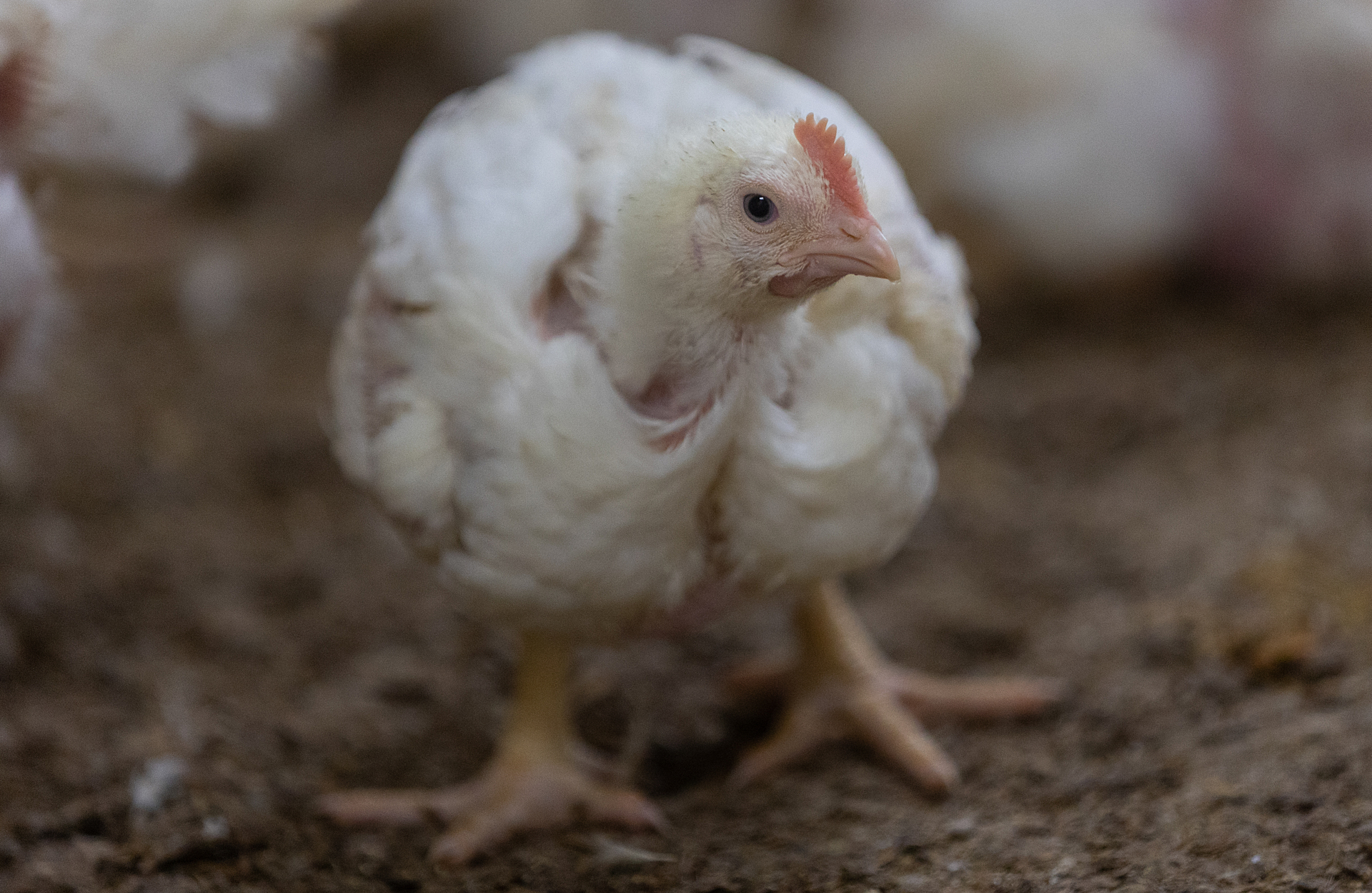
Christians will continue to disagree about whether eating animals is permissible in principle. Yet the moral status of modern intensive farming should be considerably less contentious. In 2025, around 1.16 billion chickens were slaughtered in the UK.
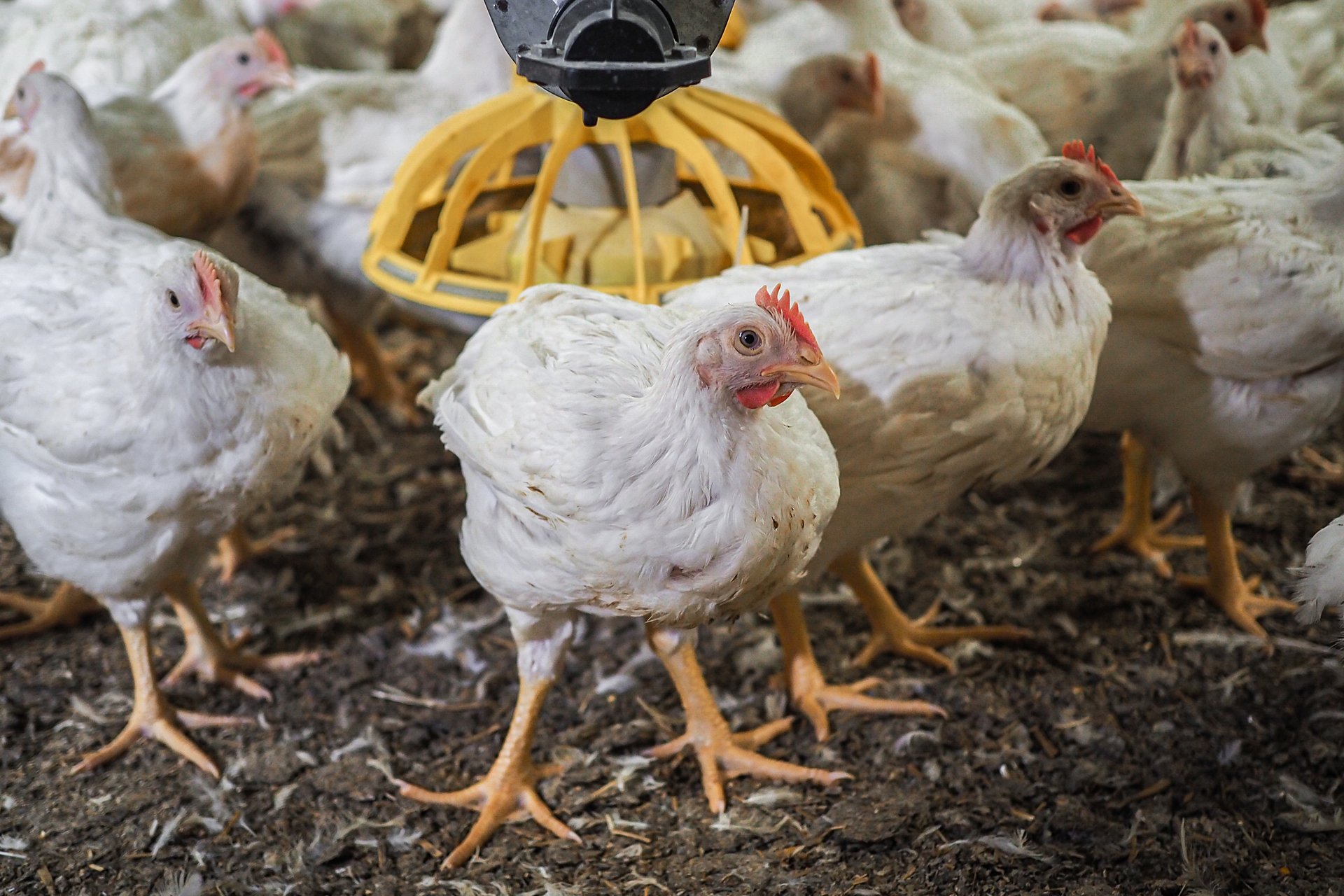
Around 95% of UK broiler production takes place in intensive indoor units, while more than 90% of chickens raised for meat are fast-growing breeds that can reach slaughter weight in as little as 35 days. This extreme growth puts enormous pressure on their musculoskeletal systems and organs. As a result, these animals routinely suffer from lameness, broken bones, heart failure, and respiratory collapse.
These are not simply occasional failures of care within an otherwise neutral system. The system itself frustrates creaturely flourishing by design. The mother hen, whom Christ invoked as an image of divine love (Matthew 23.37), and who matters to God ‘in her own right’, is reduced to a mere unit of production. Whatever permission Genesis 9 grants humanity to eat animals, it cannot provide a ready-made moral defence of cruel production systems that the biblical writers could never have imagined. Intensive farming is therefore an unavoidable test of whether the Church’s solidarity with suffering creatures will become more than theological language.
One of the most compelling concepts in Hope for All Creation is structural sin. This arises within systems that distribute benefits and harms unequally, including ‘consumerism, industrial exploitation and economic inequality’. It is also sustained by cultural narratives and advertising that make injustice appear normal, natural or necessary. Intensive animal farming fits this account with disturbing clarity. Retailers and consumers receive abundant, inexpensive meat, while animals bear its hidden cost through suffering on an immense scale. The system largely erases this suffering, as colourful packaging and advertising campaigns transform God’s creatures into reassuring, sanitised products. By the time animal products reach a church bring-and-share meal, the lives behind them have largely disappeared. This is not principally an indictment of individual farmers, many of whom are constrained by contracts, low prices and expectations of cheap food, but of the system itself. It is therefore unfortunate that, when the document turns from structural sin to practical action, it does not apply this analysis to intensive animal farming.
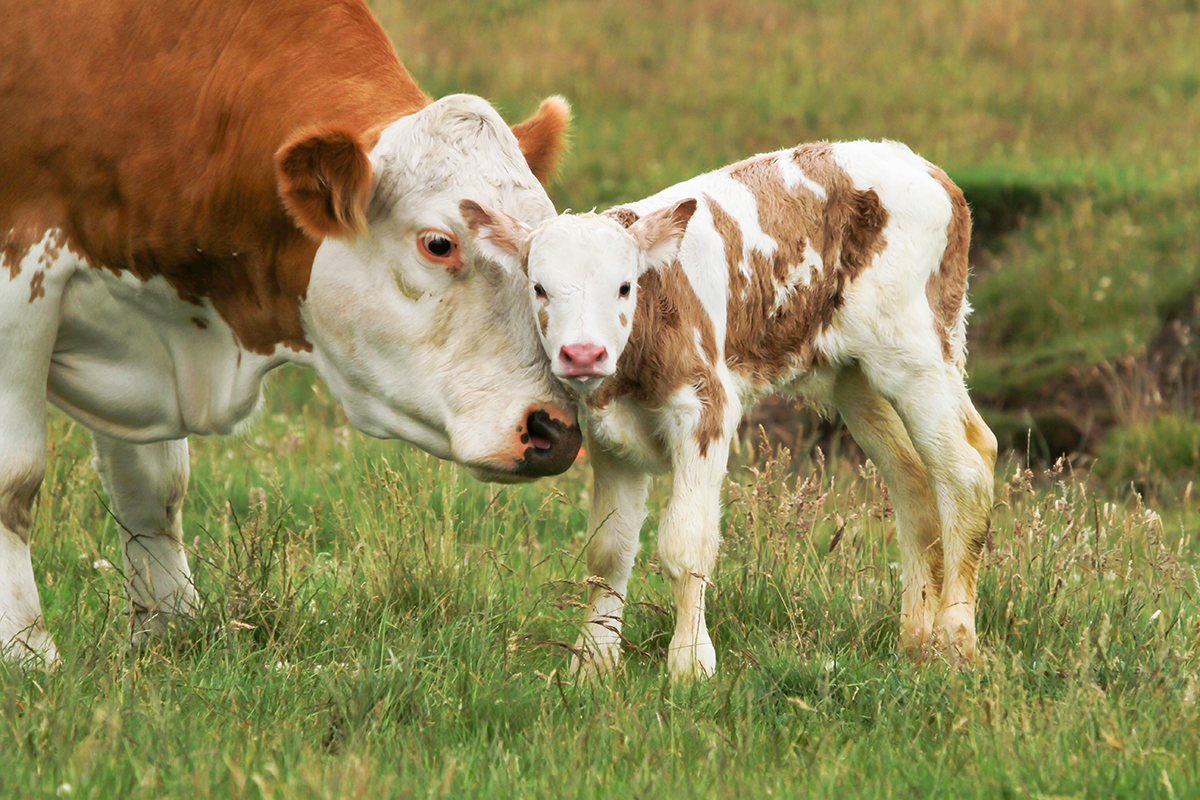
That omission becomes particularly clear in the document’s practical recommendations. Although it strikingly suggests that the Church’s local care might extend to ‘pets, farmed animals and wildlife’, it says little about what that care would require. Its clearest reference to the consequences of meat consumption concerns rainforest destruction. That is true, but it risks making animals morally visible only through emissions, deforestation and land use. A cow is not only a source of emissions. A chicken is not only part of an unsustainable system. They are living, feeling creatures whose individual lives matter to God ‘in their own right’.
When the document addresses food served by churches, however, it asks only that congregations demonstrate the ‘responsible sourcing of ingredients’. Responsible sourcing is welcome, but it is the language of supply chains. Left undefined, it evades the central question: which farming systems should churches refuse to support? If churches are serious about ecological conversion and healing their relationships with fellow creatures, they must at least ask whether routinely purchasing and serving intensively farmed animal products is consistent with that vocation.
Whatever conclusions Christians reach about eating animals in principle, rejecting systems that frustrate their flourishing by design should be a minimum response. A credible first step would be to make plant-based food the default at church gatherings rather than a special dietary request. This would reduce institutional dependence on intensive farming, offer hospitality that almost everyone can share and provide a visible sign of the reconciled relationships the document proclaims. The same principles should shape Church procurement, investment, land use and public advocacy. Any transition must also support farmers, rather than asking them to bear alone the cost of changing a system shaped by big business, policy and demands for cheap food. These measures would not settle every Christian debate about animals, but they would begin to align the Church’s practices with its theology.
The House of Bishops’ endorsement of Hope for All Creation, warmly welcomed by General Synod, is a major step towards deepening the Church’s long-overdue engagement with animals. Yet true solidarity requires the Church to follow animals into the places where their suffering remains hidden and to challenge the systems that depend upon it. Hope for All Creation has provided the theological foundations capable of transforming the Church’s relationship with fellow creatures. The task now is to make that solidarity visible in its teaching, institutions and shared life.