In Bong Joon Ho’s film Okja, a young girl called Mija loves a remarkable animal.
Okja is enormous, gentle, intelligent and deeply bonded to her. To Mija, she is not a product, not a unit and not a walking supply of meat. She is a companion. A friend. A beloved creature with habits, fears, pleasures and a life of her own.
But the world around Mija sees Okja differently. Corporate executives, marketers and food producers have another language for her. Okja is not someone to love, but something to sell. Her body is valuable because it can be processed, branded and consumed.
That is the emotional force of the film. It does not need to persuade us that Okja matters. Once we see her through Mija’s eyes, the argument is already won. The painful question is why so many other animals like her remain unseen.
Why does one animal become lovable, mournable and worth saving, while countless others disappear behind words like livestock, pork, beef, poultry and produce?
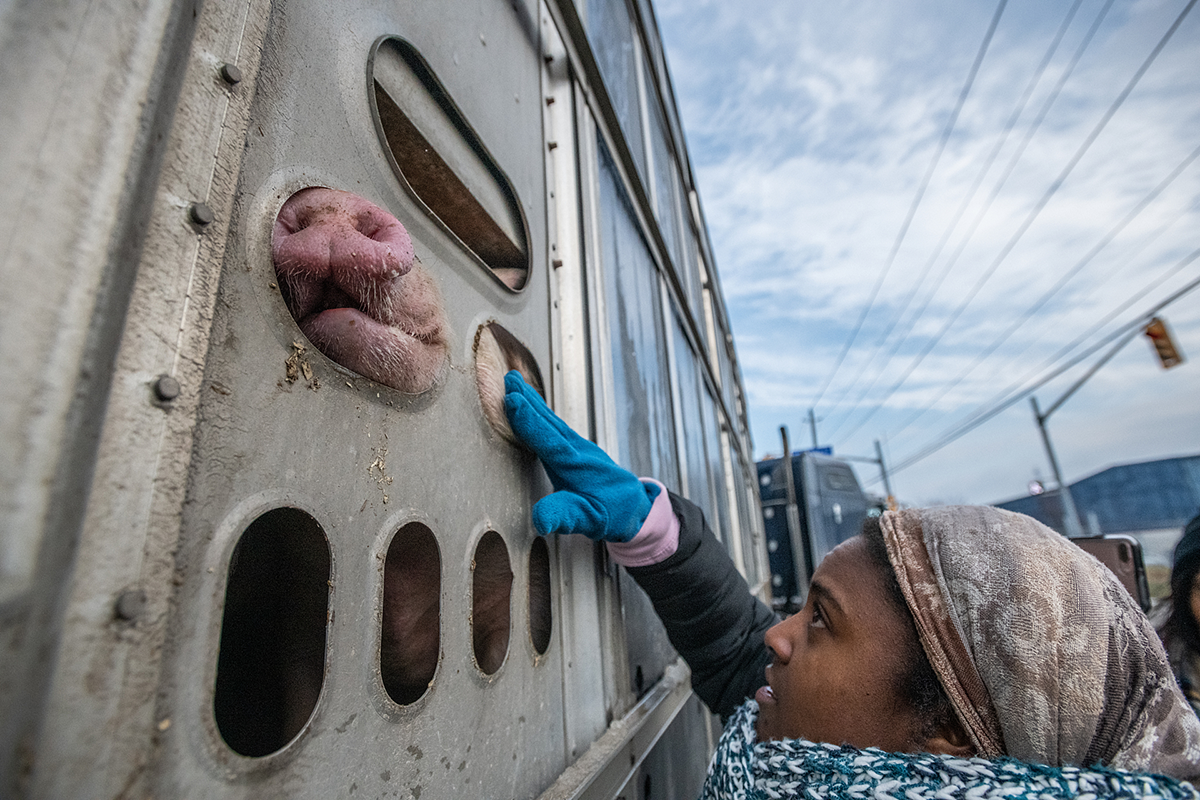
It is a question that sits at the heart of the Save Movement, a form of animal advocacy best known for vigils outside slaughterhouses. At these vigils, activists gather near the places where animals are taken to be killed. Often they stand beside transport trucks carrying pigs, cows, chickens, sheep or other farmed animals. Sometimes they offer water. Sometimes they touch a snout through the side of a vehicle. Sometimes they simply look, record, grieve and bear witness.
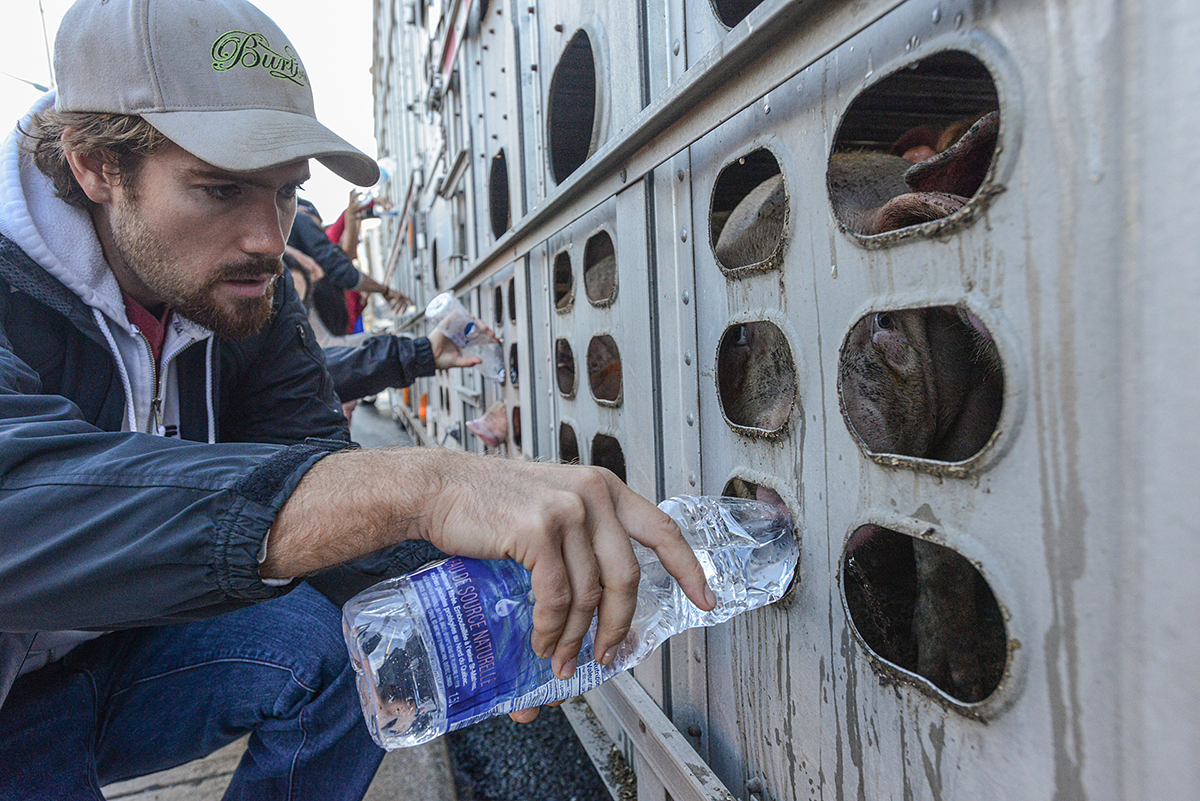
These actions are often small. They do not usually stop the trucks. They do not rescue the animals inside. They do not bring the machinery of industrial farming to a halt.
Yet they do something profound.
They refuse to let these animals pass unseen.
The Save Movement challenges one of the hidden rules of modern life: that farmed animals are not supposed to be mourned. They may be counted, priced, bred, transported and slaughtered, but they are not meant to be grieved as individuals. Their deaths are treated as routine because society has already decided what kind of beings they are. They are animals for use. Animals for food. Animals whose lives and deaths belong to the background of human consumption.
A slaughterhouse vigil interrupts that judgement.
It says: this pig is not merely part of a supply chain. This cow is not merely livestock. This chicken is not merely protein. This creature before us is alive. This creature can suffer. This creature matters.
The scholar Eva Haifa Giraud, writing about vegan activism, notes how these vigils work to include “animals as ethical subjects who are worthy of mourning.” That matters because mourning is never only an emotion. It is also a form of recognition. We mourn those whose lives we have come to see as meaningful.
Most of us know this instinctively when it comes to companion animals. When a beloved dog or cat dies, people grieve deeply. They keep photographs. They remember quirks of character. They talk about the animal as a member of the family. Some people who would never describe themselves as especially sentimental find themselves heartbroken.
This grief is not foolish. It is love responding to loss.
But when it comes to farmed animals, our culture often asks us to suspend that response. It teaches us to divide animals into categories: those we love, those we admire, those we protect, those we eat and those we try not to think about.
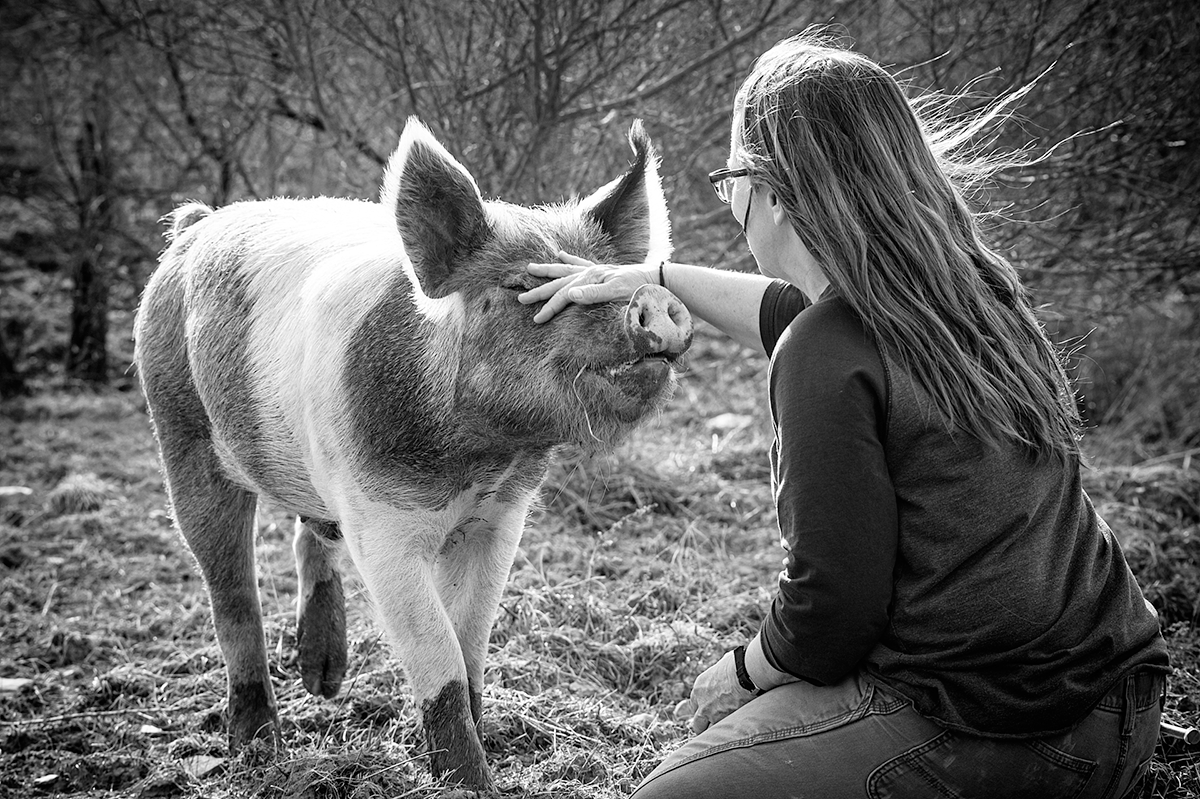
A pig can be as sensitive as a dog, but if one sleeps by the fireplace and the other is driven to slaughter, most of society treats this not as a contradiction, but as normal life.
Christianity has something deeply unsettling to say to that normality.
Jesus tells his disciples in Matthew 10: “Are not two sparrows sold for a penny? Yet not one of them will fall to the ground outside your Father’s care.”
The sparrow is not a grand or impressive creature. It is small, common and cheap. In the eyes of the marketplace, it is almost nothing. Yet Jesus places this tiny bird within the centre God’s attention.
Not one sparrow falls outside of the Father’s love.
This is a radical statement. It means that God’s care is not measured by human usefulness, price, status or emotional preference. The creature the world barely values is known by the Father. The life that seems ordinary, numerous or economically insignificant is not lost in the crowd of creation.
If not one sparrow falls outside the Father’s care, then not one pig is beneath divine notice.
Not one cow.
Not one lamb.
Not one chicken.
Not one fish.
The Christian imagination should therefore be resistant to any system that teaches us some creatures are too useful to be loved, too common to be noticed or too ordinary to be mourned.
To mourn farmed animals is not sentimentality. It is a refusal to accept the world’s judgement that some creatures are too useful, too numerous or too ordinary to grieve.
This does not mean that Christian concern for animals must always be heavy or despairing. Grief can be a burden, but it can also be a form of awakening. It can reopen parts of the heart that habit and convenience have closed. It can help us recover a more truthful relationship with the creatures who share God’s world.
At its best, animal advocacy is not only about exposing suffering. It is about restoring sight.
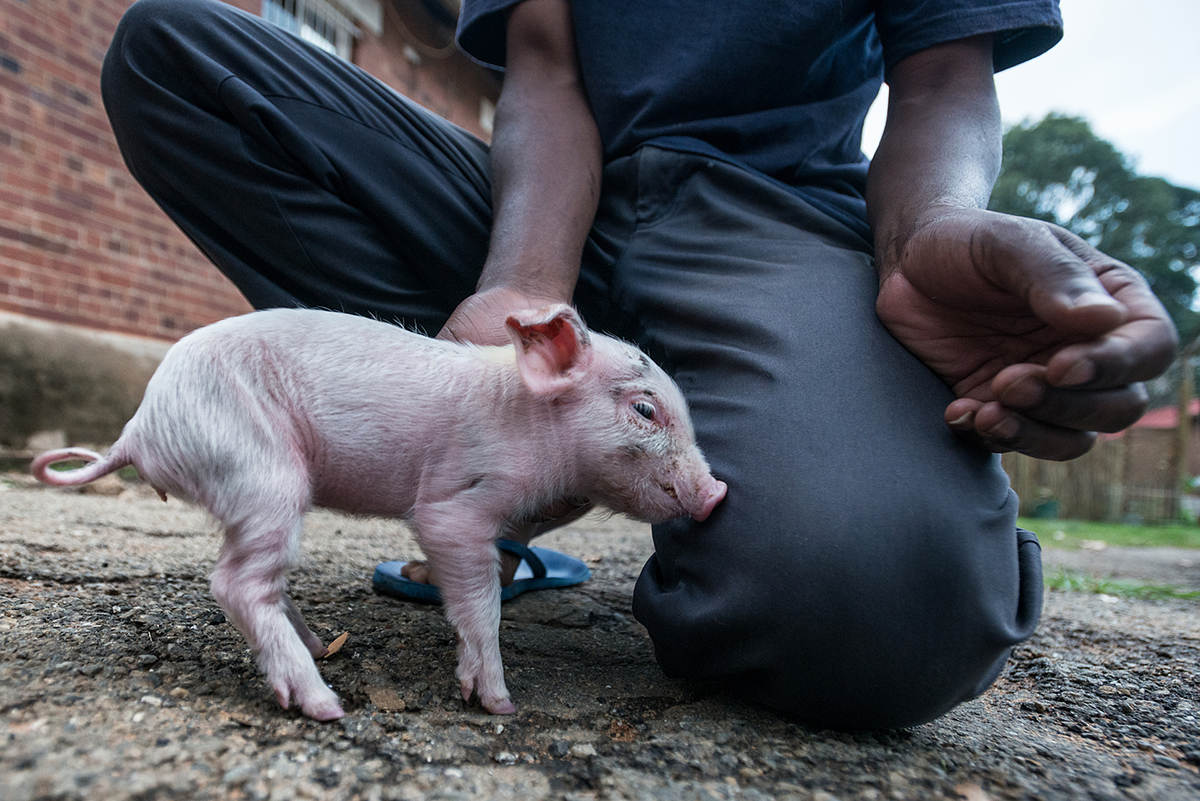
That is what happens in Okja. The film asks us to see one animal as Mija sees her: not as an object of consumption, but as a beloved life. The Save Movement does something similar in real life. It brings people close enough to farmed animals to see them not as a category, but as creatures.
For Christians, this is not foreign territory. Our faith is full of practices of attention. We keep vigil with the suffering. We pray for the forgotten. We remember the dead. We proclaim that God sees the small, the vulnerable and the overlooked.
The question is whether farmed animals are allowed into that circle of attention.
They often seem absent from our prayers, our preaching and our moral concern. They are everywhere in our food systems, but rarely present in our churches as creatures whose lives matter to God. We bless harvests, share meals and give thanks for provision, but seldom pause to consider the animals whose bodies have been turned into those meals.
The challenge is not to make Christians feel ashamed for every meal they have ever eaten. Shame alone rarely changes hearts. The deeper invitation is to ask what might happen if Christians allowed the Father’s care for the sparrow to reshape how we see the pig.
What might happen if we saw farmed animals not first as food, but as fellow creatures?
What might happen if our prayers made room for them?
What might happen if we treated grief for their suffering not as emotional excess, but as a sign that love is still alive in us?
This may begin in simple ways. Learning more. Eating differently. Supporting animal protection work. Praying for animals in farms, laboratories, transport vehicles and slaughterhouses. Speaking of them with tenderness rather than detachment. Refusing to laugh at compassion as if it were weakness.
None of these acts solves everything. But each one resists the cold judgement that farmed animals do not count as beings worthy of care.
The gospel teaches us that God’s attention reaches where human attention fails. The sparrow falls, and the Father knows. The creatures we overlook are not overlooked by God.
Perhaps the task of Christian compassion is not to invent concern for farmed animals, but to receive the concern God already has for them.
To see them differently.
To mourn them truthfully.
And, in whatever ways we can, to live as though not one of them is forgotten.