For most people, grabbing a chicken sandwich for lunch does not usually feel like a moral issue.
It is quick, familiar and ordinary. It sits in the hand between meetings, train journeys, errands and breaks from work. It does not ask much of us. It certainly does not announce that there is a creaturely life behind it.
Yet Christian faith has a habit of slowing us down and using very ordinary things such as bread, wine and water in extraordinary ways. Christianity teaches us that the material world matters. What looks ordinary can become a place of revelation. What we are trained not to see can become the very place where conscience begins to stir.
That matters when we think about food. Behind a chicken sandwich is not only a supply chain, a brand or a set of consumer choices, but a body: a living creature whose flesh has passed through systems most of us rarely see and seldom understand.
That is why Sarx has added its name to a wider open letter asking Pret A Manger to publish a phased implementation plan towards meeting the Better Chicken Commitment, especially its requirement to move to approved slower-growing chicken breeds.
The campaign, organised by Anima, raises questions about farmed animal welfare that Christians cannot simply ignore. These are questions about bodies, creatures, truthfulness and responsibility. They ask: what does the body of a chicken reveal about the Christian conscience?
Pret, the promise and the delay
The Better Chicken Commitment is a set of welfare standards for chickens farmed for meat. In the UK, it requires companies to meet criteria including a maximum stocking density, improved environmental standards, approved higher-welfare breeds, improved stunning methods, third-party auditing and annual public reporting. The UK policy refers to these standards being met by 2026 for existing commitments.
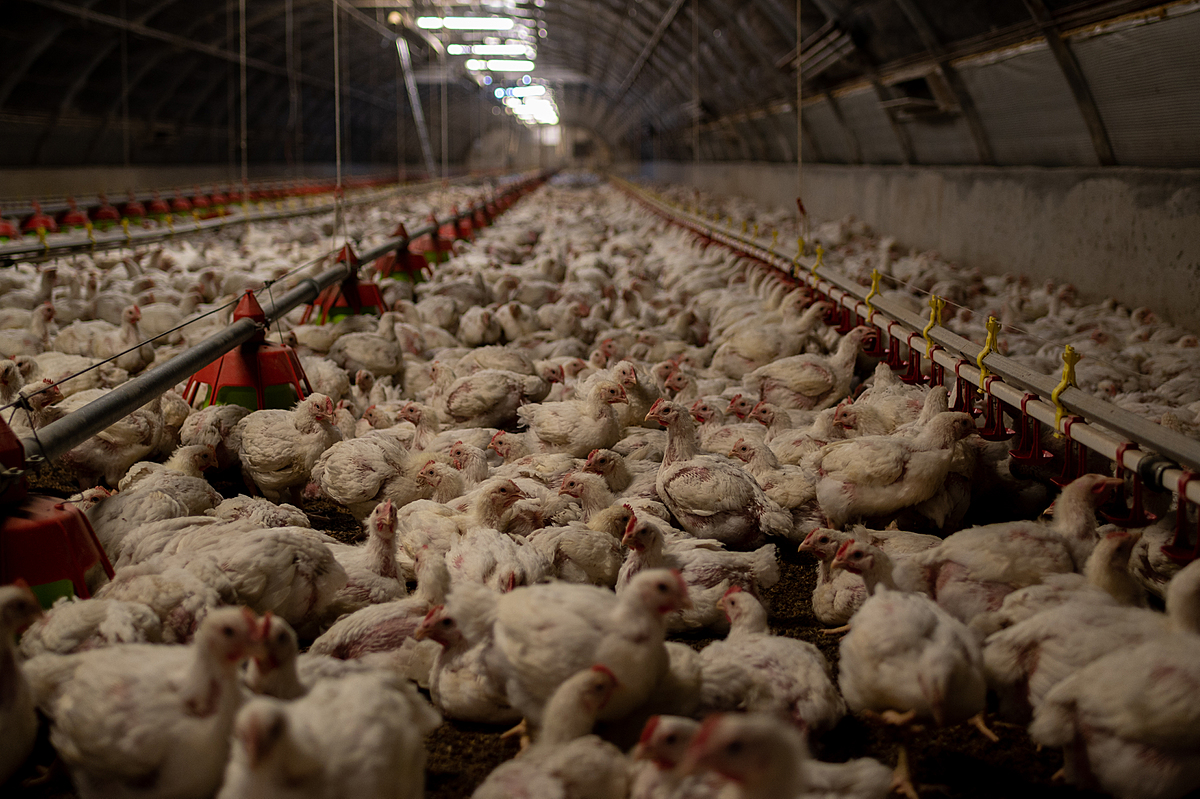
The central issue in the current campaign is breed transition. Pret’s own 2025 progress update reports 0% adoption of approved slower-growing breeds in the UK, with a proposed target of 50% adoption in 2031 and 100% in 2032. In other words, the company has not yet begun to phase out fast-growing chicken breeds in its UK supply chain.
Pret says that, it has set out a roadmap to reach 100% slower-growing breeds by 2032. Pret says this is challenging because of limited breed availability, planning constraints across the UK agricultural sector and differences between grocery retail and food service. It also says that, in the UK, all broiler chicken sourced for Pret already meets the other Better Chicken Commitment criteria.
Campaigners at Anima argue that Pret made a public commitment in 2018 to phase out what they call ‘frankenchickens’ by 2026, and that the new timeline represents a significant delay. Their public campaign invites people to sign a pledge to pause or reduce visits to Pret until the company publishes a credible plan to phase out fast-growing breeds.
Sarx, flesh and the Word
The Ancient Greek word sarx (σάρξ) literally translates to ‘flesh’.
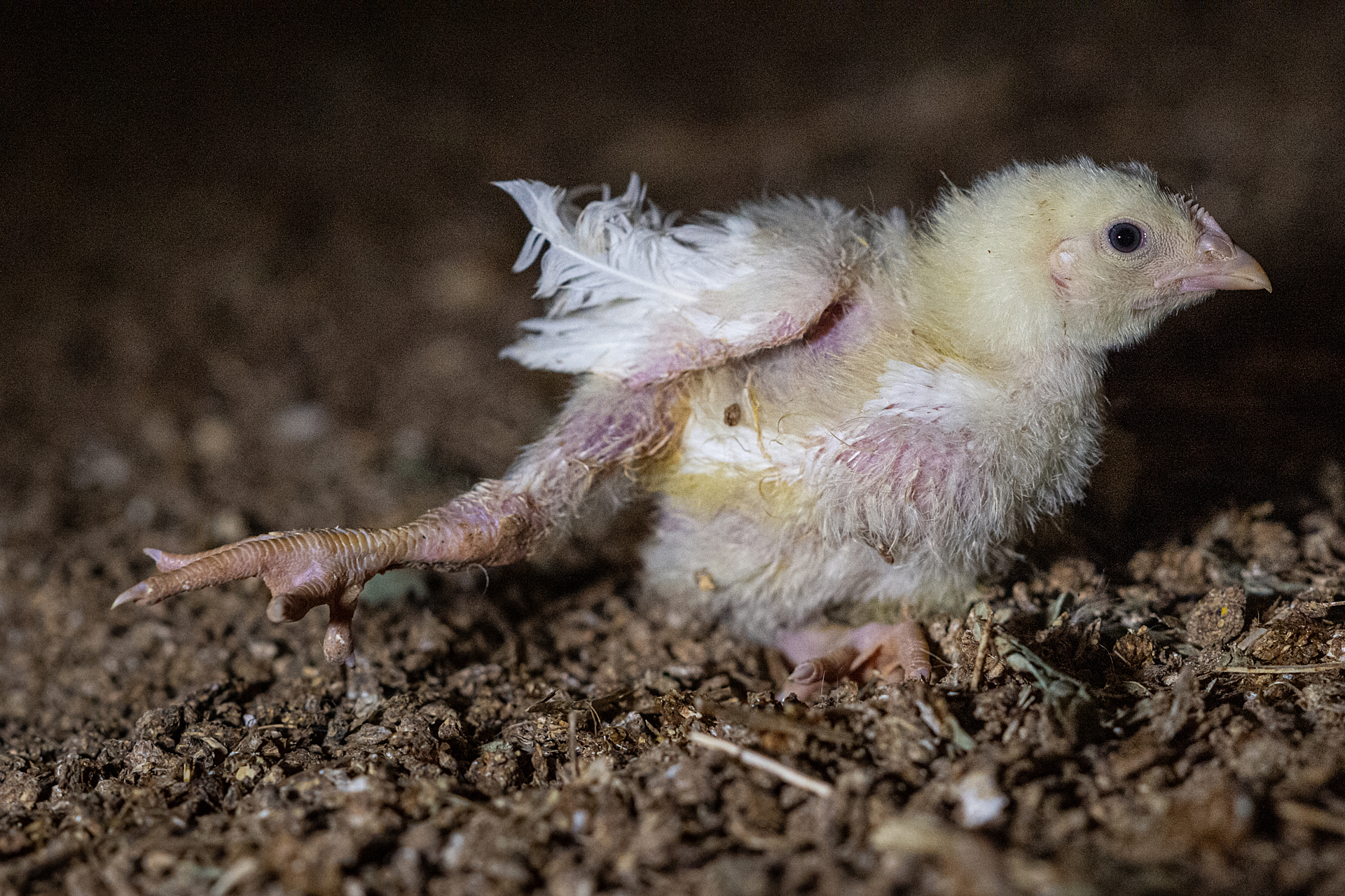
That matters here. This is not an abstract ethical issue. It concerns flesh: the body of a chicken, bred and managed within a system designed around speed, efficiency, cost and demand.
Christianity is not a faith that teaches us to ignore bodies. At its centre is the astonishing claim that ‘the Word became flesh’ (John 1:14). In Jesus Christ, God does not float above the vulnerability of creaturely life, but enters it. The Christian story is full of bodies: bodies touched, fed, healed, washed, wounded, buried and raised.
So when we ask about fast-growing chickens, we are not merely asking whether a company has kept pace with a welfare standard. We are asking what kind of world shapes a creature’s body for our convenience, and what kind of Christian imagination is needed to notice and take a stand.
The term ‘frankenchicken’ is deliberately unsettling. It is designed to make visible what ordinary food language hides. It points towards a reality which should deeply trouble us: animals whose bodies have been shaped so intensely around human demand that their opportunities for creaturely flourishing have all but vanished.
Redesigned bodies
Fast-growing chickens reveal something morally serious about our food system. They show us an economy that does not simply use animal bodies, but redesigns them around production.
Independent welfare research supports the concern that growth rate dramatically affects the capacity for chickens to flourish. A 2020 study comparing commercial faster-growing broiler breeds with a slower-growing breed found that the slower-growing birds had improved welfare and behaviour measures, including increased activity, lower mortality and better scores on several welfare indicators, although they took longer to reach slaughter weight and were less efficient by production measures.
That last contrast is important. The issue is not that the system has failed to achieve its own logic. In many ways, it has succeeded. Fast-growing breeds exist because speed, volume and efficiency have been treated as overriding goods. The question is whether those goods are good enough.
A Christian answer must be more searching. A creature is not merely a production unit. A body is not simply raw material. The chicken is not only meat-in-waiting.
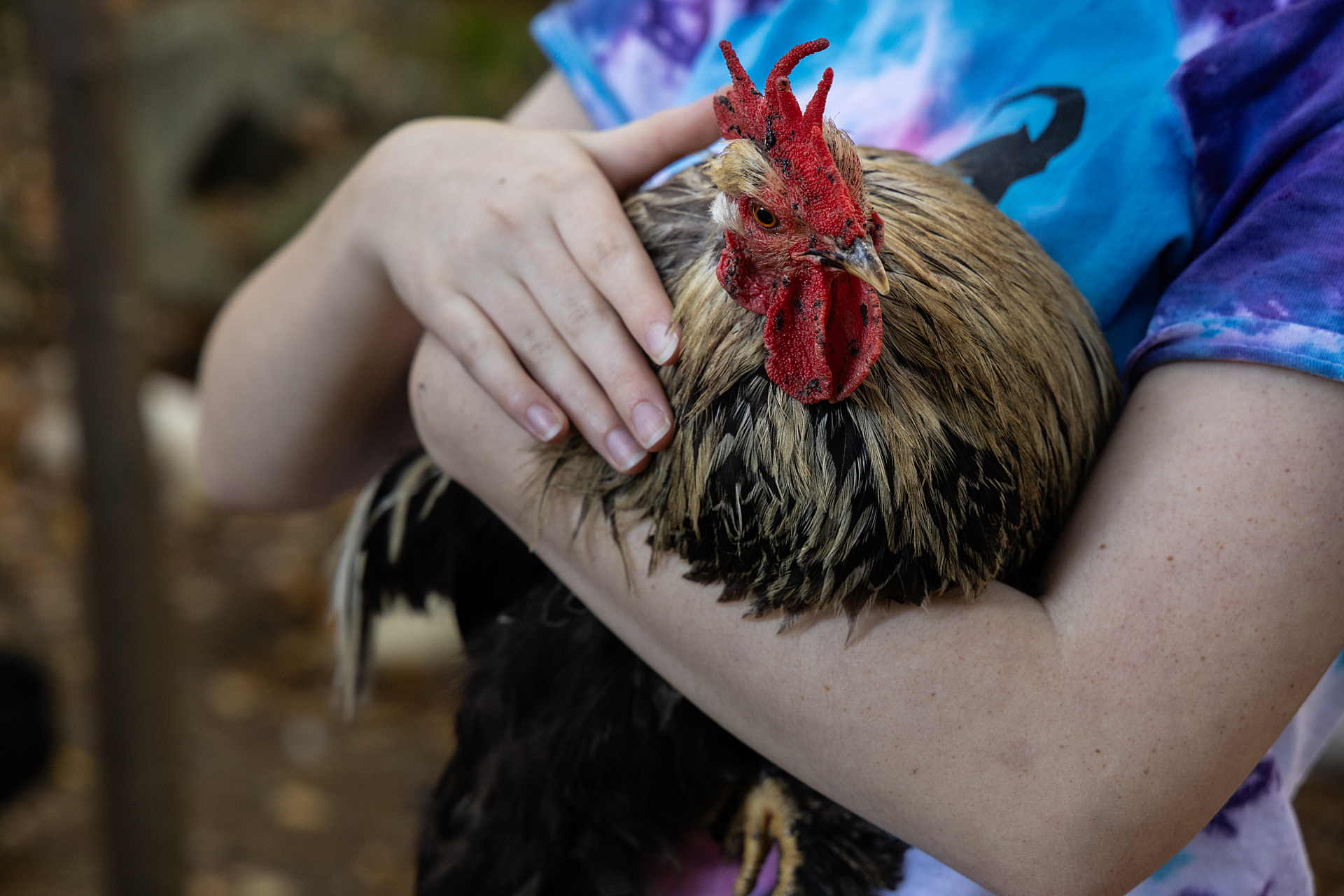
This is where Jesus’ image of the hen gathering her chicks becomes so striking. In his lament over Jerusalem, Jesus says, ‘How often have I desired to gather your children together as a hen gathers her brood under her wings’ (Matthew 23:37).
It is a tender image, but not a sentimental one. Jesus draws on the bodily, protective, creaturely life of a hen to speak of divine longing. The hen is not a decorative metaphor. Her life, her care, her wings and her chicks become a way of imagining the compassion of God.
That should make Christians pause before a farming system in which the chicken’s body is treated primarily as an instrument of yield. If the life of a hen can help us understand Christ’s compassion, then surely the life of a chicken should not be beneath Christian moral attention.
Why partial reform still matters
There is an obvious question for vegan charities such as Sarx: why support a welfare reform that still leaves chickens being farmed and killed for food?
The answer is not that welfare reform is enough. It is not. A slower-growing chicken is still a chicken bred into a system of human consumption. A higher-welfare supply chain does not resolve the deeper Christian question of whether animals should be treated as food commodities at all.
But partial does not mean meaningless. If a chicken suffers less, moves more freely, avoids some of the worst bodily harms of rapid growth or has greater opportunity to express the behaviours of a chicken, that matters. It matters even if it does not solve everything. It matters because the creature matters.
Christian ethics should be capable of holding together two truths: the longing for a more peaceable relationship with animals, and the urgency of reducing suffering in the world as it is. We can hope for more than reform while still recognising that reform may spare many creatures from needless pain.
Promises, truth and accountability
This is why Pret’s public commitment matters. The issue is not whether Pret is uniquely bad. It is not. Pret is part of a much wider food system in which cheapness, convenience and constant availability depend on forms of animal farming most consumers rarely see.
But Christian ethics is concerned with truthfulness as well as compassion. If a company makes a public welfare commitment, it is reasonable to ask what that commitment means in practice. A delayed promise can still be a promise. But without nearer-term milestones, visible progress and independent accountability, it risks becoming something thinner: an aspiration placed safely beyond the horizon of present responsibility.
Connor Jackson, CEO and co-founder of Anima, said:
Pret’s own reporting shows that it has not yet begun to phase out fast-growing chickens, despite promising to do so eight years ago. These birds are still paying the price while meaningful change is pushed years into the future. We are calling on Pret to publish a credible, time-bound plan with verifiable interim steps, so its animal welfare promise becomes more than words.’
Learning to see the chicken, not just a sandwich
Modern food culture works by hiding animals behind product. It teaches us to see lunch, but not the life behind lunch. It teaches us to notice taste, price, convenience and brand, but not the body shaped by our demand.
Christian faith should train our attention differently. It should help us see the chicken not as a unit of protein, not as a supply-chain challenge, not as an ingredient in a wrap, but as a fellow creature whose flesh matters before God.
The question raised by Pret’s delayed chicken welfare commitment is therefore not only whether one company will change its supply chain. It is whether Christians will allow the chicken’s body to trouble our conscience, enlarge our compassion and awaken our moral imagination.