In recent years, questions about food, animals and Christian responsibility have moved from the margins to the centre of theological and ethical debate. As industrial farming intensifies, ecological crises deepen, and churches revisit what faithful discipleship looks like in a wounded world, long-standing assumptions about animal use are being re-examined. Christian Inspired Vegetarianism. Humans and Animals in the Divine Plan by Marilena Bogazzi enters this conversation with clarity and theological seriousness, asking whether care for animals belongs not merely to ethical reflection but to the spiritual heart of Christianity itself. Alma Massaro’s reflections on the book offer a careful guide through its scriptural, theological and historical arguments.
Factory Farming
Christmas is a season of abundance. Tables groan under food. Kitchens fill with the familiar smells of roasting, herbs and spice. Families gather, traditions are honoured, and we reassure ourselves that this is what celebration looks like.
And yet Christmas tells another story.
It is the story of a God who enters the world quietly and without excess. A child born among animals, not above them (Luke 2:7). A saviour whose first bed is a feeding trough, whose arrival is announced not to the powerful but to shepherds keeping watch through the night. Christmas does not begin with triumph, but with vulnerability.
Which raises an unsettling question, one we rarely ask amid the festivities:
What would Jesus eat for Christmas?
Not as a matter of dietary preference, nor as a test of moral purity, but as a question of faithfulness. What kind of table would reflect the kingdom his birth announces?
Christmas words and Christmas habits
When Christians speak about Christmas, certain words come easily. Good news. Great joy (Luke 2:10). Peace on earth (Luke 2:14). Love. Hope. We sing of angels and light and reconciliation. We proclaim Christ as the Prince of Peace, the one who comes to establish a kingdom of justice and righteousness (Isaiah 9:6–7).
It is striking, then, how seamlessly another word has joined this vocabulary: meat. In the UK, turkey has become so closely associated with Christmas that it feels almost inevitable, as though it were woven into the fabric of the feast itself.
Yet this association is not ancient, nor biblical. Turkey was unknown in Britain until the sixteenth century and only became widespread centuries later. What feels timeless is, in fact, remarkably recent. And more recent still are the systems that now produce Christmas meat at scale.
This matters, because Christmas is not only a celebration of what has been. It is also a sign of what is coming. To ask what belongs at the Christmas table is to ask what kind of world we are welcoming into being.

The animals of the manger and the animals of the market
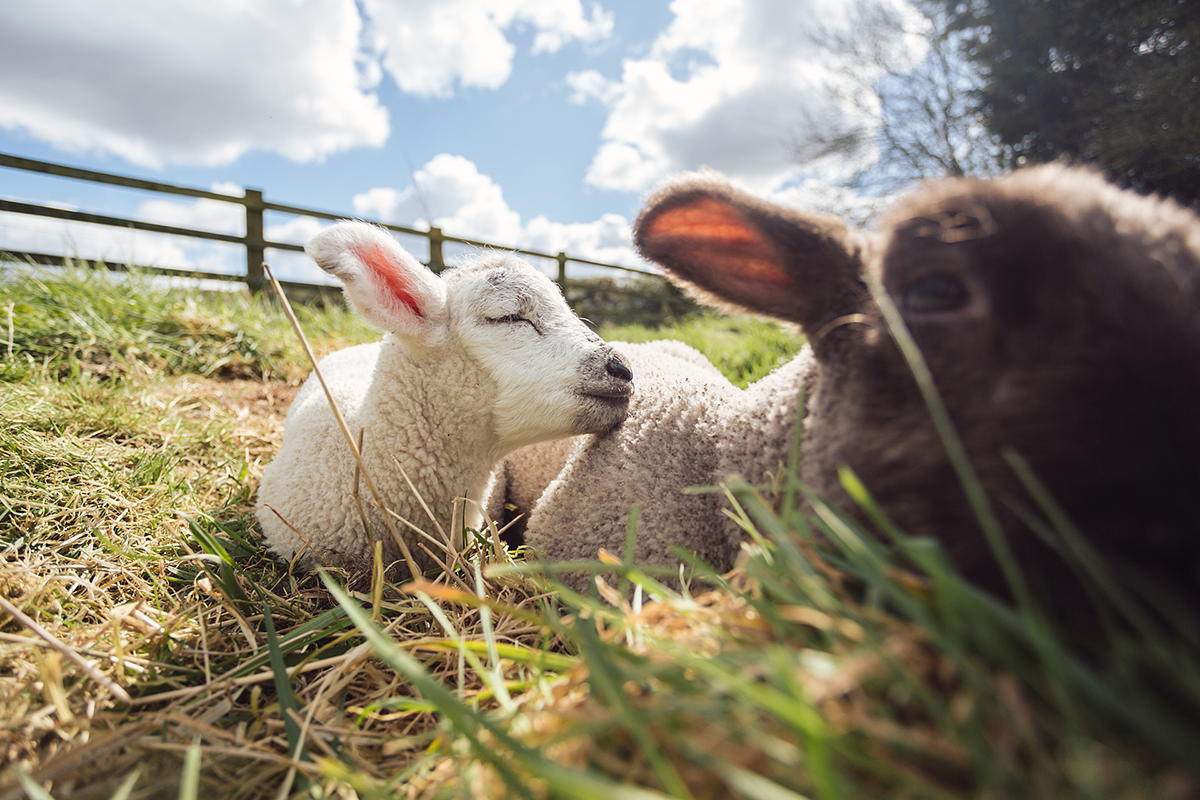
The Nativity story is crowded with animals. Ox and ass, sheep and lamb, creatures who appear not as decoration but as companions to God’s arrival in flesh. The incarnation takes place in their midst. God chooses to be born into the shared life of creatures.
This should not surprise us. Scripture consistently affirms that animals belong to God and matter to God. ‘The earth is the Lord’s, and everything in it’ (Psalm 24:1). God declares animals good (Genesis 1:24–25), delights in them (Psalm 104:31), includes them in covenant (Genesis 9:8–10), and promises their restoration alongside humanity (Isaiah 11:6–9; Colossians 1:20).
And yet, in our celebrations, animals appear in a very different form. Not as fellow creatures, but as products. Not as lives, but as portions. Their suffering is kept at a distance, hidden behind packaging, advertising, and tradition.
The dissonance is easy to miss because it is normalised. Most of us have inherited a way of thinking in which some animals are to be cherished, others consumed, and the lines between them feel natural rather than cultural. Scripture repeatedly challenges this complacency. ‘The righteous know the needs of their animals,’ Proverbs tells us, ‘but the mercy of the wicked is cruel’ (Proverbs 12:10).
Christmas intensifies this challenge rather than softening it. In Jesus, God does not hover above creation but enters it. The Word becomes flesh (John 1:14), not as an abstraction, but as a vulnerable body dependent on the care of others, human and non-human alike.
Concession, not celebration
Some will object that Jesus himself ate meat. The Gospels place him within the food practices of his time, and it would be disingenuous to deny that. But this observation is often used too quickly, as though it settles the question rather than opens it.
Even if Jesus shared in the food practices of his time — eating fish, participating in festival meals — that world bears little resemblance to an age of industrial farming, hidden slaughter, and global supply chains that turn lives into commodities.
The Bible itself treats the eating of animals with caution. In the opening vision of creation, humans and animals alike are given plants for food (Genesis 1:29–30). Violence is absent from God’s declaration that creation is ‘very good’ (Genesis 1:31). Permission to eat animals appears later, after the flood, framed not as an ideal but as a concession to a fractured world (Genesis 9:3–5), accompanied by fear, dread, and a warning that life is not to be taken lightly.
This tension runs throughout scripture. Meat is permitted, but never celebrated as God’s best intention. Care for animals is repeatedly mandated, even when it conflicts with efficiency or profit (Deuteronomy 25:4; Exodus 23:12). Limits are placed on human appetite. Restraint is treated as a moral good.
Jesus himself points to this pattern when he speaks of certain practices being allowed ‘because of your hardness of heart’, but not reflecting God’s original intention (Matthew 19:8). Christmas belongs firmly within this story. It does not erase human brokenness, but neither does it bless it. The incarnation is God’s way of entering a compromised world in order to heal it, not endorse all its habits.
For Christians, this opens the possibility of seeing plant-based eating not as a rule to be enforced, but as a sign — however partial — of the peace we long for and await.

Eating in expectation of the kingdom
Christian faith is shaped not only by memory, but by expectation. The angels’ proclamation of peace is not wishful thinking. It is a promise. A declaration that history is bending towards reconciliation.
The prophets imagined this future as a peaceable kingdom, a world in which violence no longer governs relationships between creatures (Isaiah 11:6–9). The New Testament insists that, in Christ, this future has already begun. Creation itself, Paul writes, longs for liberation and renewal (Romans 8:19–22).
Christians are called to live now in the light of what is coming, to practise — imperfectly — the life of the kingdom. ‘Put off the old self,’ Paul urges, ‘and clothe yourselves with compassion, kindness, humility, meekness, and patience’ (Colossians 3:9–12).
Food is part of this practice. Eating is never merely biological. It is cultural, social, and deeply symbolic. What we choose to eat, and how it is produced, reflects what we value and whose lives we consider expendable.
Christmas feasts are not just meals. They are rehearsals of what we believe celebration should look like. They tell a story about abundance, belonging, and whose lives count.
Peace on earth, at the table
At Christmas, peace is everywhere in our language and music. We sing of it, pray for it, exchange it in greetings. Yet peace, in the biblical imagination, is never abstract. It is practised, embodied, and tested in ordinary decisions. ‘Seek peace and pursue it’ (Psalm 34:14).
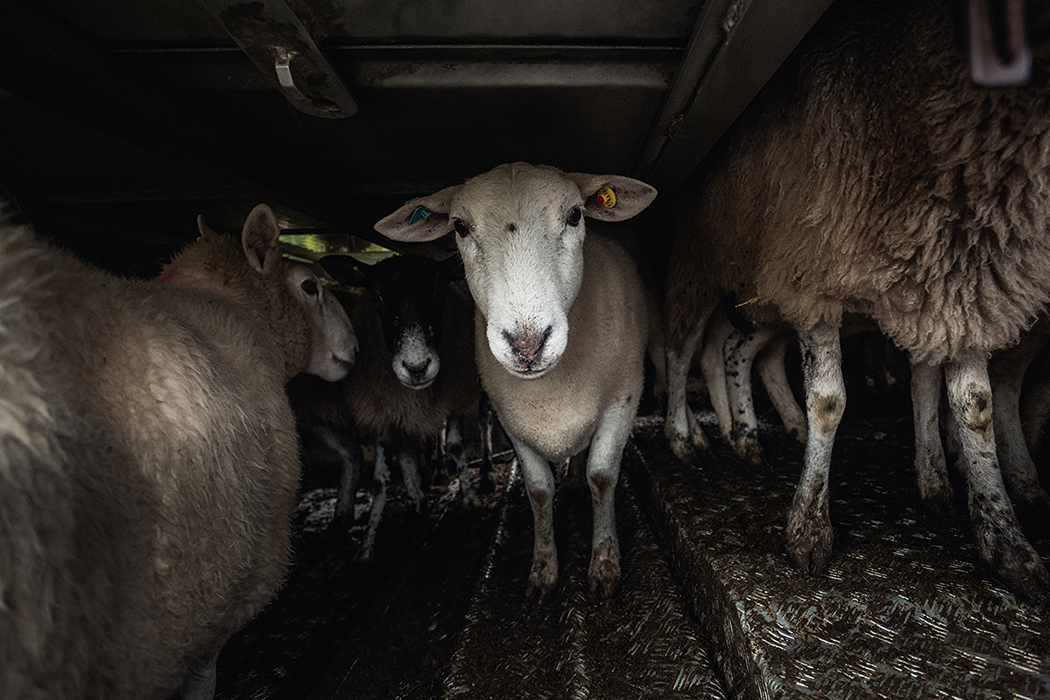
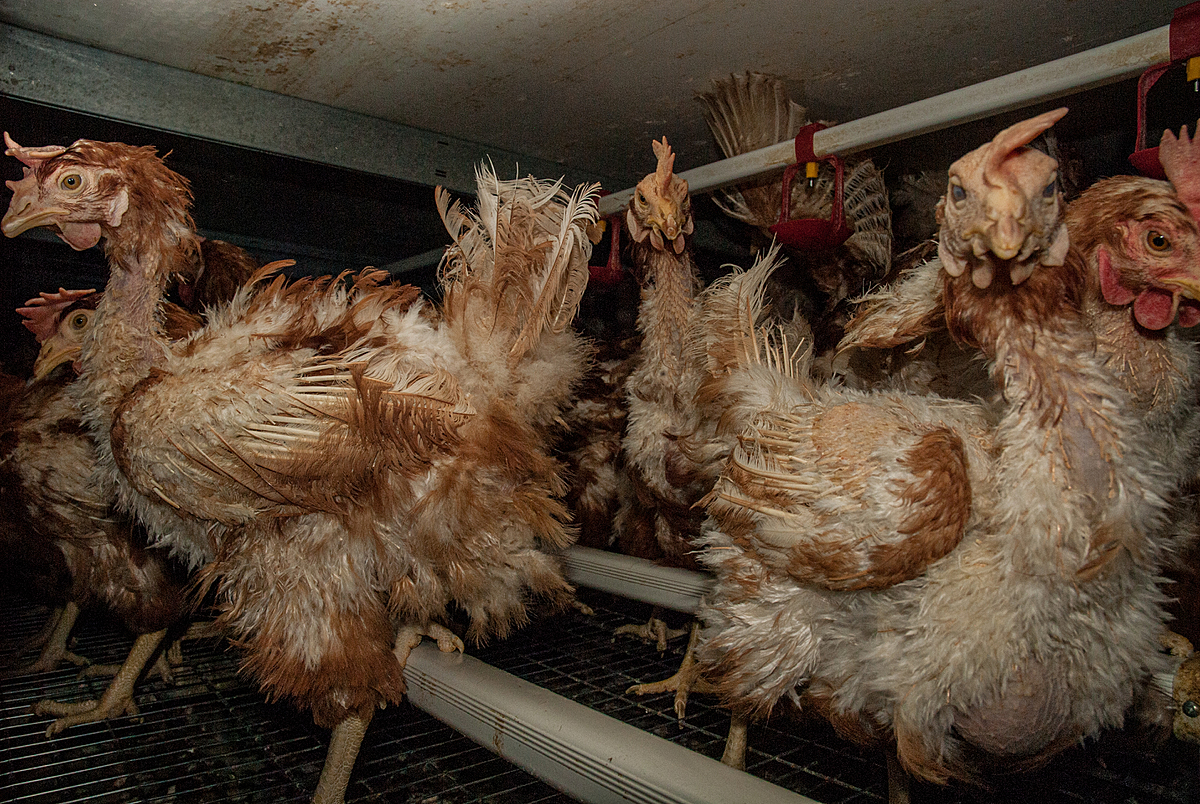
The industrial systems that now dominate animal agriculture sit uneasily with this vision. In the UK alone, millions of animals eaten at Christmas are reared in intensive indoor systems designed for efficiency rather than care. Suffering is not an accident of these systems, but a condition of their success.
Jesus consistently challenges forms of power that prioritise gain over mercy. He reminds his followers that God desires compassion, not sacrifice (Matthew 9:13), and warns against piety that obscures harm. It is difficult to imagine that the relentless suffering built into modern food systems would sit comfortably with the one who identified himself with ‘the least of these’ (Matthew 25:40).
Christmas invites us to look again. Not to condemn ourselves or others, but to notice the gap between what we celebrate and what we sustain.

A different kind of abundance
One of the quiet fears beneath resistance to change is the fear of loss. That a Christmas without meat would be diminished, joyless, less generous. Yet this assumption says more about habit than about reality.
Scripture repeatedly insists that God’s abundance does not depend on exploitation. ‘The Lord is good to all, and his compassion is over all that he has made’ (Psalm 145:9). Across cultures, plant-based food has long been associated with feasting, hospitality, and delight. What is often framed as sacrifice may, in practice, be a recovery of abundance from excess.
Seen this way, choosing compassion at Christmas is not about asceticism or self-denial. It is about alignment. About allowing the story we tell in word and song to be echoed, however imperfectly, in how we live.
For some, faithfulness this Christmas may mean trying a fully plant-based meal. For others, it may begin with smaller acts — centring vegetables rather than meat, choosing higher-welfare alternatives, or simply allowing discomfort to interrupt habit. Christmas rarely asks for perfection, but it often invites first steps.
What would faithfulness look like?
The question ‘What would Jesus eat for Christmas?’ is not meant to produce a single, uniform answer. It is meant to unsettle us just enough to create space for reflection.
Would our tables look the same if we took seriously the vulnerability at the heart of the Nativity? If we allowed the angels’ song of peace to reach beyond sentiment and into practice? If we remembered that the kingdom Christ inaugurates includes not only humanity, but ‘all things, whether on earth or in heaven’ (Colossians 1:20)?
Perhaps the most faithful Christmas table is not the one that preserves every tradition, but the one that dares to ask whether those traditions still serve the good news we celebrate.
If Christmas proclaims peace on earth, then it is worth asking — quietly, honestly — whether a feast of peace can depend on hidden violence.
When COP30 convenes in Belém, deep within the Brazilian Amazon, the world’s leaders will gather in one of the most biologically rich places on earth. The Amazon is home to jaguars slipping through the shadows, pink river dolphins gliding beneath sunlit waters, macaws streaking across the canopy, and thousands upon thousands of species still unnamed by science. It is a place of astonishing life and, tragically, one of the most dangerous regions on earth to be an animal.
As we prepare for this critical climate summit, Christians are rightly speaking about justice, biodiversity, and stewardship. But there is a missing voice in our climate conversations: the voice of the animals themselves. COP30 offers an extraordinary opportunity for the global Church to recognise that climate justice is not only a human concern. It is also an issue of compassion, morality, and deep spiritual significance for the creatures with whom we share God’s earth.
This article explores why animals must be placed at the centre of our Christian engagement with COP30 — and why doing so is an act of faithfulness to the God who calls creation “very good”.
Every November, millions of people around the world take part in World Vegan Month — a time to celebrate plant-based living and to reflect on our relationship with animals and the planet. For Christians, it offers more than a dietary challenge or lifestyle trend. It’s an opportunity to rediscover a deep current of compassion running through Scripture — a call to live in greater harmony with all God’s creatures.
Created for peace: animals in God’s story
From the very first chapter of Genesis, animals are not an afterthought but integral to creation’s goodness. God delights in the living world, blessing the animals and calling them “good” before humanity ever arrives on the scene. When humankind is created and given dominion over the earth, the same passage also sets a boundary — humans are to eat from the plants and trees (Genesis 1:29). Dominion, therefore, cannot mean domination. It is stewardship rooted in service, responsibility, and reverence.
After the Flood, God renews His covenant not only with Noah but with “every living creature of all flesh” (Genesis 9:12). The rainbow covenant is striking in its scope: it embraces sparrow and serpent, ox and whale, as well as humankind. God’s promises extend beyond the human family, revealing that animals are included in the moral and spiritual concern of the Creator.
The prophets envision the same truth in the language of hope. Isaiah imagines a time when “the wolf shall dwell with the lamb” and the earth shall be “full of the knowledge of the Lord” (Isaiah 11). This peaceable vision — echoed in Hosea and Revelation — portrays creation restored to its original harmony. In that kingdom, predation and fear are no more. To live toward such a vision is to align ourselves with God’s ultimate will for creation: reconciliation, not exploitation.

Christ and the creatures
Jesus’ ministry embodies that reconciling love. When challenged about healing on the Sabbath, He reminds His critics that anyone would rescue an animal fallen into a pit — for mercy outweighs rule-keeping (Matthew 12:11). His teaching assumes compassion for animals as natural and obvious. Elsewhere He points to God’s care for even the smallest of birds: “Not one of them is forgotten before God.”
The Lord’s frequent use of animal imagery — sheep, birds, vines, foxes — rests upon the real worth of those creatures. His description of Himself as the Good Shepherd presupposes that shepherds are meant to love and protect their flocks. A metaphor that comforted His listeners only makes sense if compassion for animals was itself a moral good. The shepherd who lays down his life for the sheep reflects divine love that extends through all living beings.
Throughout Christian history, this theme of compassion has never been lost. St Francis of Assisi spoke tenderly of “our brothers the birds” and called the sun, moon, and animals his kin. St Isaac the Syrian wrote that a merciful heart “burns with love for all creation: for people, for birds, for animals, even for demons.” More recently, C. S. Lewis condemned needless cruelty to animals as a betrayal of Christian conscience, reminding his readers that sentience itself demands moral regard.
In all these voices runs a common conviction: to follow Christ is to grow in mercy, and mercy cannot be confined to our own species.
Naming the wound
If the biblical and spiritual vision is one of harmony, the reality of modern animal agriculture reveals how far we have strayed. Each year tens of billions of land animals — and far more fish — are bred and slaughtered in industrial systems that prioritise profit over compassion.
Hens are confined to cages so small they cannot spread their wings. Pigs are kept in metal crates where they cannot turn around. Chickens are bred to grow so rapidly their legs buckle under their own weight. Many animals endure painful mutilations without anaesthetic and suffer immense stress and illness before slaughter.

Even those who rarely think about animal welfare instinctively recoil from such scenes. As philosopher Alastair Norcross once noted, if any neighbour were discovered keeping puppies in such conditions, the community would be horrified. Yet these same methods are routinely accepted when the victims are chickens or pigs.
Factory farming also harms people: it damages the environment, spreads zoonotic disease, and leaves workers traumatised by the conditions they witness. As Christians called to love both neighbour and creation, we cannot turn away. To inflict suffering on sentient creatures, when alternatives abound, contradicts the very heart of the Gospel.
Practising mercy this World Vegan Month
World Vegan Month offers a simple invitation: to align our daily habits more closely with our faith. Mercy can begin at the table.
Personally, you might try a vegan month as an act of discipleship — a spiritual discipline that joins compassion with gratitude. It needn’t be about perfection, but intention: choosing foods that honour life, seeking nourishment without harm, and discovering that plant-based meals can be joyful, abundant, and good for body and soul.
Within households and churches, November can become a season of creative hospitality:
- Host a plant-rich bring-and-share lunch or fellowship meal that celebrates God’s provision from the earth.
- Share vegan recipes through church newsletters or social media.
- Offer prayers of thanksgiving for creation and blessings for animals, echoing the covenant with “all flesh.”
- Encourage sermons or study groups exploring the biblical vision of peace between species.
Such practices can help Christians see that food choices are not trivial but deeply spiritual — expressions of love, justice and hope.
At an institutional level, churches and Christian organisations might review catering policies or move towards “default-veg” events where plant-based options are the norm. They can champion sustainable food systems, support local growers, and speak prophetically about compassion in agriculture. In a world where the poor are often most harmed by environmental damage, these steps also serve human justice.

A witness to the peaceable kingdom
Christianity has always proclaimed that creation is not ours to consume, but God’s to cherish. Each act of mercy, each choice to eat or live more gently, is a small sign of the kingdom Christ proclaimed — a world where every creature has its place and none are forgotten.
This November, as the wider world celebrates World Vegan Month, the Church has a chance to bear distinctive witness: to live out the covenant of peace with all living things. Our plates can become altars of thanksgiving; our meals, signs of God’s future. In turning away from unnecessary cruelty, we turn toward the One whose mercy is over all His works.
As the psalmist writes, “The Lord is good to all; His compassion is over all that He has made.” (Psalm 145:9)
May this compassion guide our hearts, our tables, and our witness — not only this month, but always.
As Christians gathered to explore how faith informs their response to pressing global issues, animal concerns emerged as a crucial yet often overlooked area for compassionate action. From Dr Dustin Crummet’s compelling theological insights on why animal advocacy is an essential part of Christian impact to Thom Norman’s strategic insights into tackling factory farming, the conference highlighted a renewed commitment to seeing animals as part of God’s beloved creation.
Jamie Berger, filmmaker, writer, and activist, discusses The Smell of Money, a new documentary which tells the story of a North Carolina community suffering as a result of pork factory toxic waste.
Dr Philip J. Sampson FOCAE, writer and lecturer on animals and animal ethics explores John Calvin’s teachings on animals and considers how we might apply them today in making our food choices.
Vegan clergy members from across the UK explore Christian perspectives on vegan and animal issues in this unique six-part video series.
The priests consider faith-based reasons for caring about animals and address pressing concerns surrounding animal cruelty in the meat and dairy industries, the environmental crisis, human food security and much more.
They also reflect upon the highs and lows of being a Christian vegan in ordained ministry and share stories from their personal journeys.
Joyce D’Silva, Ambassador Emeritus and former Chief Executive of Compassion in World Farming, discusses her new book Animal Welfare in World Religion and reflects upon the relationship between faith and animal issues.
Veganism, dizzying in the speed of its growth, is now ubiquitous on restaurant menu options, billboards, newspapers and television. The vegan message, with concerns over animal suffering and environmental degradation at its heart, has struck a chord with many Christians. Subsequently, discussions about veganism are becoming more common among people of faith. Whether it be a light-hearted exchange or heated debate, in person or on social media, a question which often arises in conversation is “but didn’t Jesus eat meat?”