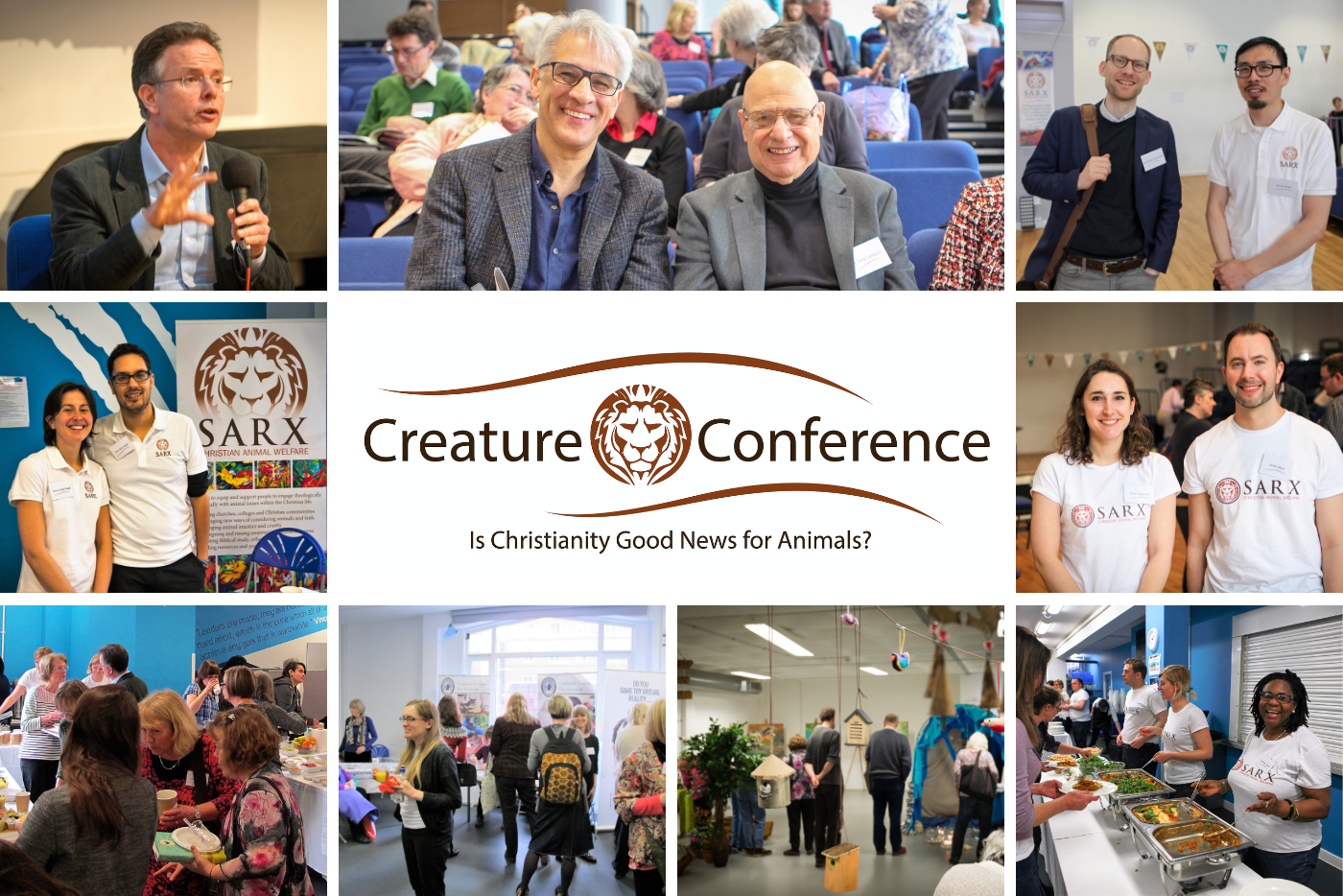
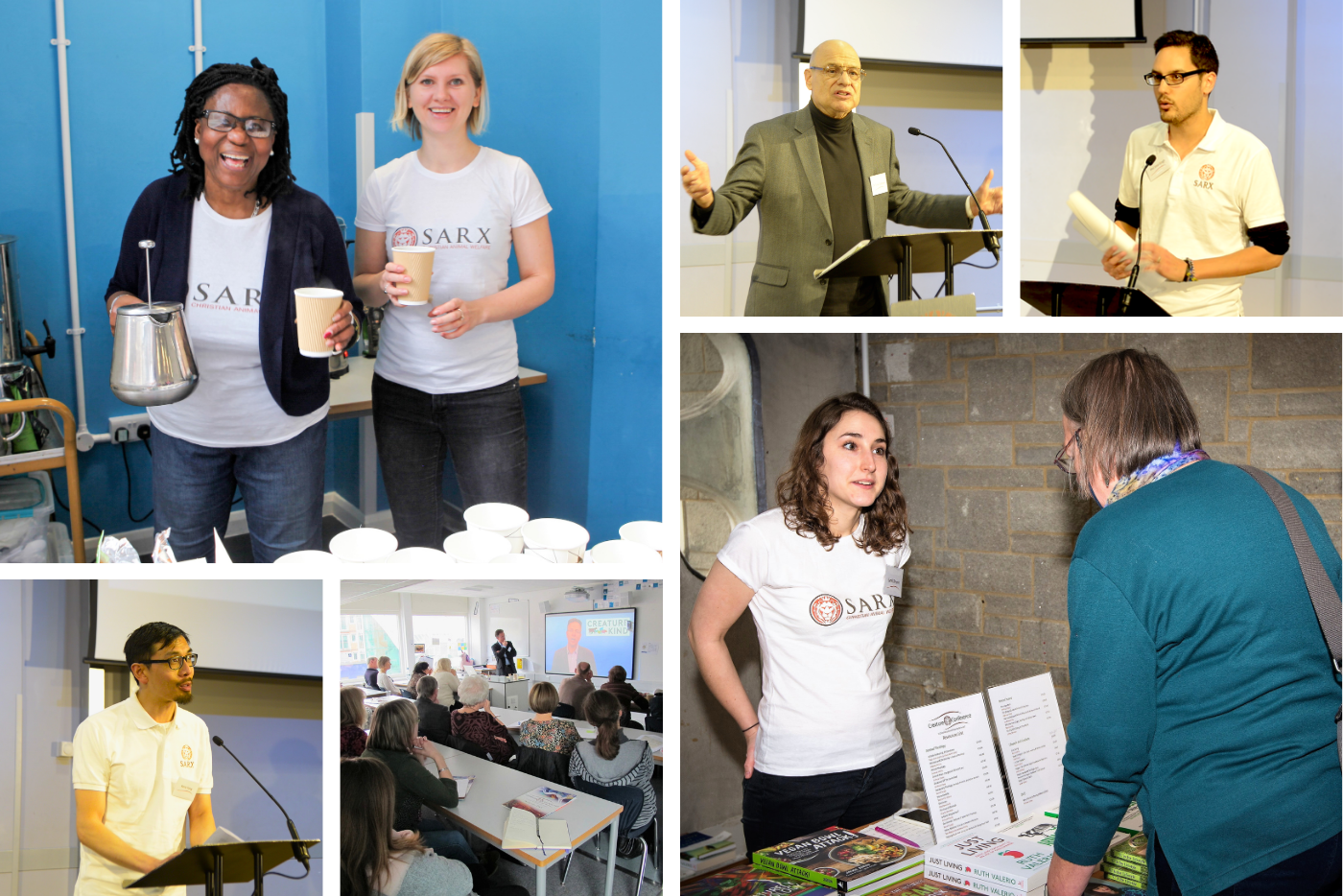
The Sarx Creature Conference in London, brought together nearly 200 Christians to explore the relationship between faith and animals.
Held in March 2017, it was the largest Christian engagement with animal issues of its kind in modern times, drawing speakers and attendees from across the UK and beyond.
For many, it was the first time these questions had been taken seriously within a Christian setting.
The conference revealed something important.
Across churches and traditions, there is a growing recognition that concern for animals is not a marginal issue, but one that touches on theology, discipleship and the way Christians live in the world.
For many attendees, the day marked a shift in how they understood their faith and its implications.
Keynote Talks
Leading voices from across the Christian world explore the relationship between faith and animals. Watch the full keynote talks below.
Animals: Who Cares?
Professor David Clough
Chair in Theology and Applied Sciences at the University of Aberdeen and a Local Preacher in the Methodist Church
Professor David Clough explores the place of animals within Christian theology, arguing that concern for animals has become disconnected from faith despite deep biblical and historical roots.
He reflects on the paradox of modern attitudes to animals, where widespread affection coexists with industrial systems of harm, and suggests that many Christians feel this tension but lack a theological framework to address it.
Drawing on Scripture, tradition and personal experience, he calls for a renewed Christian engagement with animals as part of faithful discipleship.
Speaking Up For Those Without a Voice
Dr Tony Campolo
Sociologist, Baptist pastor, author, speaker and social activist
In this deeply personal and wide-ranging talk, Tony Campolo reflects on the connection between Christian spirituality and compassion for animals.
Drawing on his own journey from a more rational, systematic theology towards a contemplative and experiential faith, he argues that true Christian spirituality leads naturally to empathy, not only for people but for all creation.
He explores the biblical vision of a restored creation, in which human and non-human life are held together in God’s purposes, and challenges the assumption that faith concerns only human salvation.
Through stories, humour and theological reflection, he calls Christians to rediscover love as the heart of discipleship, expressed not only in relationships with others but in how we respond to the suffering of animals.
Why Should Christians Care About Animals?
Dr Margaret Adam
Theologian, ethicist and visiting tutor at St Stephen’s House, Oxford
In this carefully structured theological reflection, Margaret Adam explores what makes concern for animals a distinctly Christian question.
She argues that care for animals flows from the identity of Christians as members of the body of Christ, called to live now in the light of the peaceable kingdom to come.
Drawing on Scripture, worship and the life of the church, she suggests that animal concern is not an optional cause but something already woven into Christian practice, from prayer and confession to the Eucharist itself.
She also challenges the assumption that Christian action must be justified by measurable impact, proposing instead that even small acts of care can bear witness to the reconciliation of all creation in Christ.
Catholicism, Animals and Laudato Si
The Rt Revd John Arnold
Roman Catholic Bishop of Salford
In this wide-ranging reflection, Bishop John Arnold explores the place of animals within the broader Christian call to care for creation.
Beginning with Scripture and the tradition of the Church, he reflects on humanity’s responsibility for the welfare of all creatures, not as domination but as a form of stewardship shaped by knowledge, humility and care.
Drawing on the vision of Pope Francis in Laudato Si, he emphasises the interconnectedness of environmental, social and animal concerns, and the urgent need to recognise the damage caused by modern systems of production and consumption.
He highlights education as a central challenge, noting how easily the realities of animal suffering are hidden from view, and calls for a renewed commitment to “see, judge and act” in response.
A Theology of Animal Happiness
Professor John R. T. Berkman
Professor of Moral Theology at Regis College, University of Toronto
In this philosophically rich lecture, John Berkman explores what it means to speak of happiness, not as a fleeting feeling, but as the flourishing of a creature according to its nature.
Drawing on Scripture, Christian tradition and classical philosophy, he argues that both human and non-human animals are created with their own capacities and purposes, and that their “blessedness” lies in being able to live and flourish in accordance with these.
He offers a critique of approaches that focus primarily on reducing suffering, suggesting that this risks overlooking the deeper question of what constitutes a good life for each creature.
Instead, he calls for a renewed theological vision in which animals are understood as creatures of God with their own forms of flourishing, inviting Christians to attend more closely to the lives of particular species and to seek their good as part of God’s creation.
Can Christians Enable the Flourishing of All God’s Creatures?
Dr Ruth Valerio
Theologian, environmentalist and author
In this reflective and personal talk, Ruth Valerio traces her own journey towards a deeper theological understanding of animals and the wider creation.
She describes how a shift in perspective, from reading the Bible through a human-centred lens to recognising God’s concern for all creation, reshaped her faith and practice. Drawing on passages such as Genesis, John and Colossians, she highlights the recurring biblical theme of God’s love for the whole world, not only human beings.
Through stories from her own life, including raising animals as a family, she explores how these insights lead to practical questions about food, responsibility and everyday choices.
She concludes by pointing to a vision of creation gathered in worship, inviting Christians to live now in a way that reflects that reality.
What Would An “Animal Friendly” Church Look Like?
The Rt Revd Dominic Walker OGS
Former Anglican Bishop of Monmouth
In this engaging and practical talk, Bishop Dominic Walker reflects on what it might mean for churches to become more attentive to animals in their life and witness.
He explores three dimensions of an “animal-friendly” church: practical action, pastoral care, and mission. Through a series of stories and examples, he shows how small changes, from welcoming animals into church spaces to caring for churchyards as habitats, can communicate a deeper theology of hospitality and creation.
He also highlights the pastoral importance of recognising people’s relationships with animals, including grief and companionship, and the opportunities this creates for more attentive and compassionate ministry.
Looking outward, he suggests that concern for animals can open new pathways for mission, inviting those outside the church to reconsider Christianity as a faith that speaks to the whole of creation.
Panel Discussion
One of the highlights of the day was a panel discussion chaired by The Revd Steve Chalke, Baptist Minister and Founder of the Oasis Charitable Trust, bringing together the speakers to explore key questions around faith, animals and ethics.
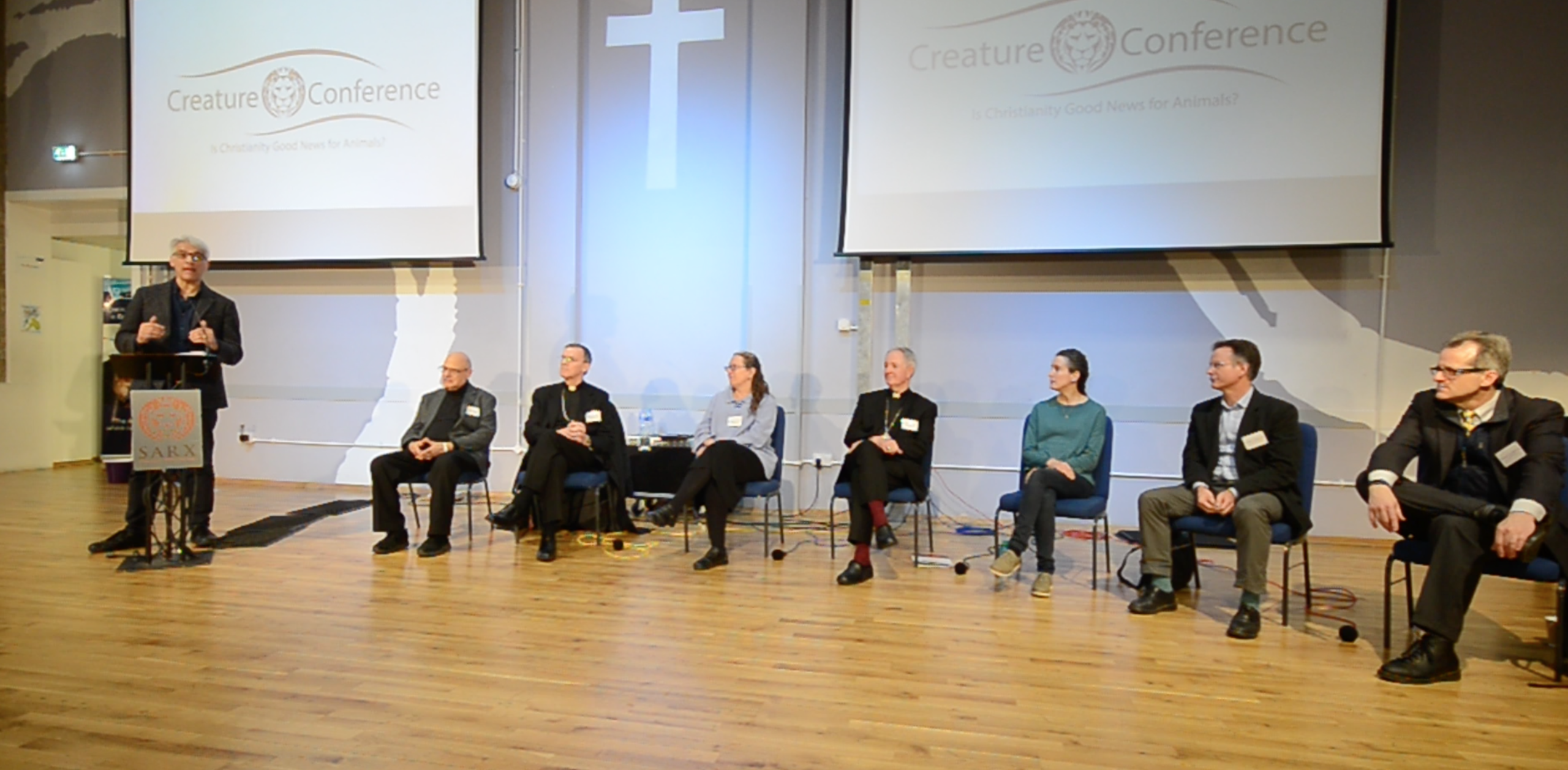
Listen to the full panel discussion
Reflections
Attendees reflected on the significance of the day:
An outstanding success and very well attended. The speakers were all excellent, and it was a good idea to have the workshop sections. The interactive prayer space was a brilliant realisation of a novel idea. It is extraordinary that you managed to galvanise so many people to support you with it.”
Thank you so much for an amazing, invigorating and encouraging day yesterday. It really was a key day in my Christian journey! ”
I felt that everything about the day was both excellent and outstanding! The physical event itself was top class in all that was provided: the friendliness of the team, the overall ethos and ‘feel’ of the event, the food and drink (vegan rules, totally wonderful!), the detailed organisation etc etc. Well done!”
The Creature Conference marked an important moment in bringing animal concerns into Christian conversation. The questions it raised continue to shape the work of Sarx today.