

In recent years, questions about food, animals and Christian responsibility have moved from the margins to the centre of theological and ethical debate. As industrial farming intensifies, ecological crises deepen, and churches revisit what faithful discipleship looks like in a wounded world, long-standing assumptions about animal use are being re-examined. Christian Inspired Vegetarianism. Humans and Animals in the Divine Plan by Marilena Bogazzi enters this conversation with clarity and theological seriousness, asking whether care for animals belongs not merely to ethical reflection but to the spiritual heart of Christianity itself. Alma Massaro’s reflections on the book offer a careful guide through its scriptural, theological and historical arguments.
Will the animals we know and love be in heaven?
In his latest book A Heaven for Animals: A Catholic Case and Why It Matters, Jesuit theologian and ethicist Christopher Steck offers a thoughtful, hope-filled answer. Drawing on Scripture, Catholic tradition, and the writings of Popes John Paul II, Benedict XVI, and Francis, he makes the case that God’s redemptive work includes not only humanity but also the nonhuman creatures with whom we share this life.
But for Fr Steck, this hope is not merely a distant dream—it has consequences for how Christians live today. If animals are part of the new creation, then our relationships with them matter now, and our choices should reflect the kingdom values of harmony, compassion, and justice.
In the excerpts below, Fr Steck first explores out the theological foundation for including animals in God’s eternal covenant, and then challenges us to consider the ethical implications for our treatment of animals in the present.
Excerpt from Chapter 4, Contemporary Magisterial Views of Animals and Their Salvation, p.82
Denying salvation to the sentient animals that have lived in this present age goes against the logic of God’s redemptive work. God loved individual creatures into existence. God is the God of relationships and wants to enter into a covenant with all creatures. It would be odd for God, who loved the present world into existence, to discard the old and simply create a new version of it. The animals that exist here and now are part of our lives, part of human history; sometimes they have shaped our lives in profound ways. Our relationships with them have been life-giving to us and, we hope, to the animals themselves. Preserving one side of creaturely relationships (the human part) while abandoning the other (the nonhuman part) seems contrary to the covenantal hopes that God achieved in Christ.
I read Pope Francis as advocating an inclusive view of the resurrection in his theology of creation. He repeatedly reminds us that God cares for each creature—not just for creation in general but for the concrete, individual creatures within it.
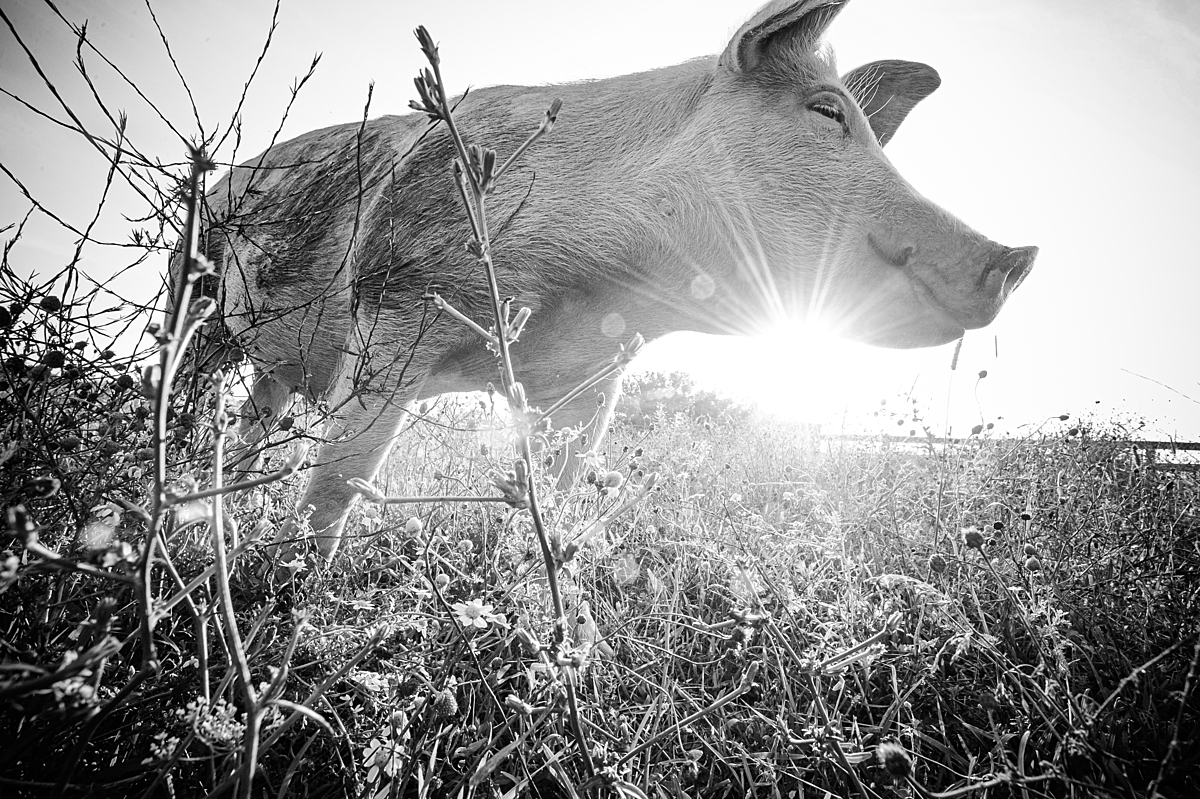
Excerpt from Chapter 8, Animal Ethics: Applied, p.152
Typical practices in meat production reflect neither the way God values creation nor the Christian task of bringing God’s creatures into the liberation of the kingdom. Not all Christians are required to embody kingdom values of harmony and friendship with animals by abstaining from meat, but it does seem important to avoid when possible practices that are so pointedly antithetical to those values and witness to the alternatives. The duty of the entire Christian community is to act before others in ways that edify and build up, even when and perhaps especially when those practices upend and destabilize socially engrained expectations about how we are to relate to nonhuman creatures.
Learn More
Christopher Steck SJ is a Jesuit priest and the Healey Family Distinguished Professor at Georgetown University where he teaches courses in Christian ethics and moral theology. His research focuses on the intersection of theology, ethics, and the natural world, with a special interest in Catholic teaching on the moral status of animals.
Fr Steck is the author of A Heaven for Animals: A Catholic Case and Why It Matters and has published on ecological ethics and the theological foundations for creation care.
Excepts published with permission from Georgetown University Press.
Why do so few Christians talk about animals—and what might happen if we did? In this honest and thought-provoking interview, philosopher and theologian Simon Kittle reflects on his journey towards a deeper compassion for all creatures. Drawing on insights from his new book God and Non-Human Animals, Simon explores the blind spots in Christian thinking, the emotional cost of change, and why the Church still finds it hard to take animal suffering seriously. Challenging but full of grace, his words invite us to rethink what faithfulness really looks like in a world shared with fellow creatures.
What if meat were more than just food—what if it were shaped by cultural, economic, and psychological forces that influence our relationships with animals? In his book, Interpreting Meat: Theorizing the Commodification and Consumption of Animals, professor Teddy Duncan Jr. challenges us to rethink meat as a commodity deeply tied to cultural practices and beliefs. In this interview, Duncan explores the language surrounding meat, the values that shape human-animal relationships, and how understanding these dynamics can lead to a more compassionate and reflective engagement with the world around us.
It’s rare to encounter a book on veganism that doesn’t feel like a rallying cry for restraint or an exercise in moral chastisement. Yet, in Hungry Beautiful Animals, philosopher Matthew C. Halteman presents an entirely different narrative. This book is an invitation—a love letter to life in all its forms—that reframes veganism not as a sacrifice, but as a path to abundance, joy, and flourishing.
Hungry Beautiful Animals positions itself as a ground-breaking contribution to the vegan movement, challenging both vegans and non-vegans alike to rethink how we approach this lifestyle. Halteman’s premise is simple yet radical: veganism should not be defined by what we give up, but by what we stand to gain. For too long, the vegan message has centred on suffering, shame, and scarcity. Halteman flips the script, focusing instead on the beauty and joy that a plant-based life offers—for humans, animals, and the planet.
In this insightful interview, Fr Terry Martin, a vegan Catholic priest, discusses his latest book Animals in Heaven?. Drawing from his pastoral experience and Catholic teachings, he reflects on the spiritual significance of animals, their place in creation, and how Christians can integrate compassion for animals into their faith practices. Fr Terry shares personal stories and theological insights, inviting readers to reconsider their relationship with God’s creatures.
Poorva Joshipura, Senior Vice President of International Affairs for PETA UK, discusses her latest book Survival at Stake, reflects on our moral responsibility towards animals and explains how animal agriculture is behind some of the biggest threats facing humanity.
Laura Wright, Professor of English at Western Carolina University, introduces The Vegan Studies Project, which explores veganism as an identity and ideology, and considers its depiction in literature, the arts, popular culture, and the media.
Joyce D’Silva, Ambassador Emeritus and former Chief Executive of Compassion in World Farming, discusses her new book Animal Welfare in World Religion and reflects upon the relationship between faith and animal issues.
Philip Lymbery, chief executive of Compassion in World Farming, discusses his latest book Sixty Harvests Left which details the appalling impact of industrial farming on climate change, the urgent need to reform our food systems and what practical steps can be taken to avoid a climate catastrophe and greatly reduce animal suffering.
Newer Posts