In this deeply personal and thought-provoking reflection, Dr Daniela Rizzo, Lecturer in Systematic Theology at Alphacrucis University College, explores how childhood concern for a beloved cat became the starting point for a wider theological journey. Challenging visions of salvation centred on escape from creation, she argues for a richer Christian hope rooted in the healing and renewal of all that God has made.
Latest News
In The Lord of the Rings, J. R. R. Tolkien imagines a world of hobbits, wizards, forests and ancient powers. Among its most memorable creatures are the Ents: tree-like beings who act as shepherds and guardians of the forests.
The most famous of them is Treebeard. When the hobbits Merry and Pippin encounter him, they meet a being whose speech belongs to an older, slower world. His words are not efficient. They do not rush towards usefulness. They grow, like roots beneath the soil, from memory, place and long attention. To speak too quickly, in Treebeard’s world, is almost to fail to speak truthfully.
This is part of what makes the Ents so compelling. They are not voiceless, but their voices do not fit the pace of those around them. They require patience. They require humility. They require listeners willing to be slowed down.
When we look into the frightened eyes of an intensively farmed animal, what do we see?
Speaking at the University of Pennsylvania’s Penn Humanities Forum, the philosopher Slavoj Žižek gives an unsettling answer. We might assume that the question concerns animal consciousness: what does the animal feel, know, fear or understand? But Žižek turns the question around. The deeper question is not only what we see in the animal, but what the animal’s gaze reveals about us. In the gaze of the frightened animal, Žižek says, ‘you see your own monstrosity.’
Dr Ellie Atayee-Bennett is part of a growing number of scholars exploring the relationship between religion and veganism, not as separate domains, but as mutually shaping ways of life. Her work challenges the assumption that concern for animals sits at the margins of religious faith, rather than at its heart.
In this interview, she introduces the concept of ‘faith veganism’, a term she developed through her doctoral research and forthcoming book Faith Veganism: Animal Ethics, Sustainability, and Abrahamic Religiosity in the UK. Rather than a lifestyle that sits alongside belief, it describes a way of taking religious commitment seriously in everyday life, shaping how people eat, shop and relate to other creatures.
What follows is a thoughtful and grounded reflection drawn from lived experience as well as theological insight.
On Easter morning, church bells ring and Christians greet one another with ancient words: Christ is risen.
We gather in light after darkness. We speak of life after death. We proclaim hope stronger than the grave.
Yet on the same morning, in the same country, slaughterhouses are operating as usual. Lambs are processed for seasonal demand. Chickens move along mechanised lines. Bodies become units. Units become products. Products become part of the Easter table. For most of us, these realities never meet. Resurrection belongs to church. Slaughter belongs somewhere else.
But what does resurrection mean in a world of slaughterhouses?
In recent years, questions about food, animals and Christian responsibility have moved from the margins to the centre of theological and ethical debate. As industrial farming intensifies, ecological crises deepen, and churches revisit what faithful discipleship looks like in a wounded world, long-standing assumptions about animal use are being re-examined. Christian Inspired Vegetarianism. Humans and Animals in the Divine Plan by Marilena Bogazzi enters this conversation with clarity and theological seriousness, asking whether care for animals belongs not merely to ethical reflection but to the spiritual heart of Christianity itself. Alma Massaro’s reflections on the book offer a careful guide through its scriptural, theological and historical arguments.
Every November, millions of people around the world take part in World Vegan Month — a time to celebrate plant-based living and to reflect on our relationship with animals and the planet. For Christians, it offers more than a dietary challenge or lifestyle trend. It’s an opportunity to rediscover a deep current of compassion running through Scripture — a call to live in greater harmony with all God’s creatures.
Created for peace: animals in God’s story
From the very first chapter of Genesis, animals are not an afterthought but integral to creation’s goodness. God delights in the living world, blessing the animals and calling them “good” before humanity ever arrives on the scene. When humankind is created and given dominion over the earth, the same passage also sets a boundary — humans are to eat from the plants and trees (Genesis 1:29). Dominion, therefore, cannot mean domination. It is stewardship rooted in service, responsibility, and reverence.
After the Flood, God renews His covenant not only with Noah but with “every living creature of all flesh” (Genesis 9:12). The rainbow covenant is striking in its scope: it embraces sparrow and serpent, ox and whale, as well as humankind. God’s promises extend beyond the human family, revealing that animals are included in the moral and spiritual concern of the Creator.
The prophets envision the same truth in the language of hope. Isaiah imagines a time when “the wolf shall dwell with the lamb” and the earth shall be “full of the knowledge of the Lord” (Isaiah 11). This peaceable vision — echoed in Hosea and Revelation — portrays creation restored to its original harmony. In that kingdom, predation and fear are no more. To live toward such a vision is to align ourselves with God’s ultimate will for creation: reconciliation, not exploitation.

Christ and the creatures
Jesus’ ministry embodies that reconciling love. When challenged about healing on the Sabbath, He reminds His critics that anyone would rescue an animal fallen into a pit — for mercy outweighs rule-keeping (Matthew 12:11). His teaching assumes compassion for animals as natural and obvious. Elsewhere He points to God’s care for even the smallest of birds: “Not one of them is forgotten before God.”
The Lord’s frequent use of animal imagery — sheep, birds, vines, foxes — rests upon the real worth of those creatures. His description of Himself as the Good Shepherd presupposes that shepherds are meant to love and protect their flocks. A metaphor that comforted His listeners only makes sense if compassion for animals was itself a moral good. The shepherd who lays down his life for the sheep reflects divine love that extends through all living beings.
Throughout Christian history, this theme of compassion has never been lost. St Francis of Assisi spoke tenderly of “our brothers the birds” and called the sun, moon, and animals his kin. St Isaac the Syrian wrote that a merciful heart “burns with love for all creation: for people, for birds, for animals, even for demons.” More recently, C. S. Lewis condemned needless cruelty to animals as a betrayal of Christian conscience, reminding his readers that sentience itself demands moral regard.
In all these voices runs a common conviction: to follow Christ is to grow in mercy, and mercy cannot be confined to our own species.
Naming the wound
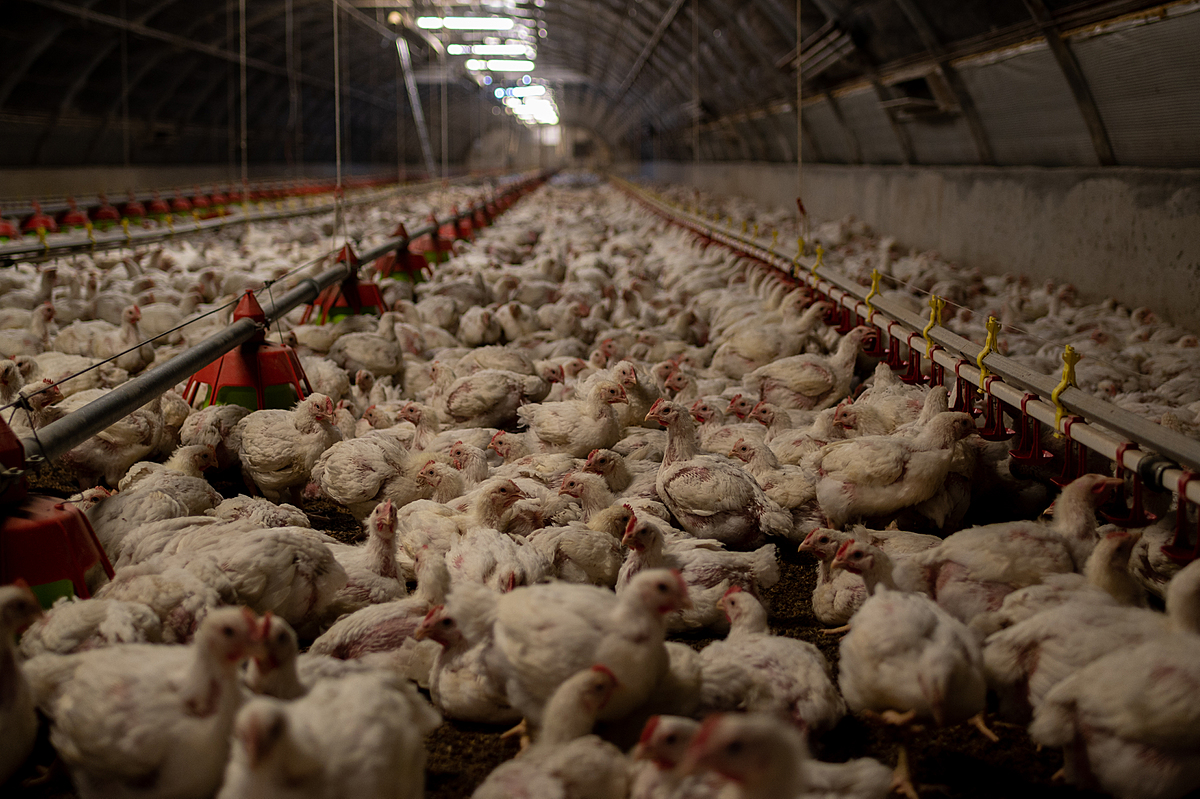
If the biblical and spiritual vision is one of harmony, the reality of modern animal agriculture reveals how far we have strayed. Each year tens of billions of land animals — and far more fish — are bred and slaughtered in industrial systems that prioritise profit over compassion.
Hens are confined to cages so small they cannot spread their wings. Pigs are kept in metal crates where they cannot turn around. Chickens are bred to grow so rapidly their legs buckle under their own weight. Many animals endure painful mutilations without anaesthetic and suffer immense stress and illness before slaughter.

Even those who rarely think about animal welfare instinctively recoil from such scenes. As philosopher Alastair Norcross once noted, if any neighbour were discovered keeping puppies in such conditions, the community would be horrified. Yet these same methods are routinely accepted when the victims are chickens or pigs.
Factory farming also harms people: it damages the environment, spreads zoonotic disease, and leaves workers traumatised by the conditions they witness. As Christians called to love both neighbour and creation, we cannot turn away. To inflict suffering on sentient creatures, when alternatives abound, contradicts the very heart of the Gospel.
Practising mercy this World Vegan Month
World Vegan Month offers a simple invitation: to align our daily habits more closely with our faith. Mercy can begin at the table.
Personally, you might try a vegan month as an act of discipleship — a spiritual discipline that joins compassion with gratitude. It needn’t be about perfection, but intention: choosing foods that honour life, seeking nourishment without harm, and discovering that plant-based meals can be joyful, abundant, and good for body and soul.
Within households and churches, November can become a season of creative hospitality:
- Host a plant-rich bring-and-share lunch or fellowship meal that celebrates God’s provision from the earth.
- Share vegan recipes through church newsletters or social media.
- Offer prayers of thanksgiving for creation and blessings for animals, echoing the covenant with “all flesh.”
- Encourage sermons or study groups exploring the biblical vision of peace between species.
Such practices can help Christians see that food choices are not trivial but deeply spiritual — expressions of love, justice and hope.
At an institutional level, churches and Christian organisations might review catering policies or move towards “default-veg” events where plant-based options are the norm. They can champion sustainable food systems, support local growers, and speak prophetically about compassion in agriculture. In a world where the poor are often most harmed by environmental damage, these steps also serve human justice.

A witness to the peaceable kingdom
Christianity has always proclaimed that creation is not ours to consume, but God’s to cherish. Each act of mercy, each choice to eat or live more gently, is a small sign of the kingdom Christ proclaimed — a world where every creature has its place and none are forgotten.
This November, as the wider world celebrates World Vegan Month, the Church has a chance to bear distinctive witness: to live out the covenant of peace with all living things. Our plates can become altars of thanksgiving; our meals, signs of God’s future. In turning away from unnecessary cruelty, we turn toward the One whose mercy is over all His works.
As the psalmist writes, “The Lord is good to all; His compassion is over all that He has made.” (Psalm 145:9)
May this compassion guide our hearts, our tables, and our witness — not only this month, but always.
St Francis of Assisi has long inspired Christians to see animals not as lesser beings, but as beloved fellow creatures—brothers and sisters under God. In this timely and thought-provoking article, Dr Daniela Rizzo, Associate Lecturer in Systematic Theology at Alphacrucis University College, Sydney, invites us to rediscover the radical implications of St Francis’ vision in the face of environmental crisis, mass extinction and theological neglect of non-human life.
In the beginning, God designed.
Not with blueprints or building codes, but with breath, beauty, and boundless compassion. Mountains were shaped, birds were feathered, whales were weighed in oceans of purpose. Every creature, from the lion to the ladybird, was part of this divine composition—made not for utility, but for joy.
Genesis tells us that God looked at all He had made and called it very good—not just the humans, but the whole interconnected tapestry of life. Trees, rivers, insects, elephants—all spoken into being by a Designer who delights in diversity and builds for relationship.
Yet somewhere along the way, we lost touch with that original vision. Our cities rose, our systems expanded, but too often they were built for humans alone. Roads cut through ancient migration paths. Buildings silenced birdsong. Farming practices inflicted suffering on the very creatures we were meant to care for.
Recently, London’s Design Museum concluded an exhibition titled More Than Human. Although the exhibition has now closed, its ideas remain deeply urgent. It invited visitors to reimagine the world not as a human-only domain, but as a shared home for all living beings. It asked a bold, almost sacred question: What if we designed the world not just for us, but for all creation?

A Design Language That Includes the Voiceless
More Than Human showcased more than 140 works that looked beyond human needs to consider how animals, plants and ecosystems might flourish if they too were part of the design brief.
There was a tapestry recreating a meadow as seen by pollinators. Seaweed sculptures — “Kelp Council” — invited viewers to imagine interspecies collaboration. One pavilion-like structure was designed as a shared sanctuary for humans, birds and insects. Another installation used AI to interpret a river’s condition and translate it into human-readable signals, allowing the river to “speak”.
It offered a quietly revolutionary idea: design, when rooted in humility and imagination, can help repair what has been broken.
Even the Sandwiches Witness
During the exhibition’s run, the Design Museum made all its catering fully vegetarian and vegan. Not as a gimmick, but as a sincere expression of values.
“We wanted our food to reflect the heart of the exhibition,” the museum noted. “This is about our relationship with the environment and other species, and a commitment to reduce our carbon impact.”
For Christians, this resonates deeply. Food is never just food. Scripture shows meals as spiritual acts. Our dietary choices shape not just our bodies, but our witness. What we eat is part of the story we tell about who matters in God’s creation.

Peace with Creation: A Season and a Calling
This year’s Season of Creation, with its theme Peace with Creation, invited Christians to reflect on how we live, build and consume — and whether those actions bring harmony or harm.
More Than Human becomes a companion to this reflection. It doesn’t merely critique human impact on the environment. It dares to imagine an alternative. It reclaims design as a sacred act of care — echoing the Genesis vocation to “serve and protect” the garden (Genesis 2.15).
Isaiah envisioned a world where no one hurts or destroys on God’s holy mountain. Paul writes of creation groaning for liberation. Jesus assures us that not even a sparrow falls outside the Father’s care. The exhibition, though not religious, carried these resonances — a signpost, in N. T. Wright’s words, pointing toward the Kingdom.

The Gospel According to Design
We do not need to be architects to respond. All of us are designing something — habits, homes, schedules, lives. Every choice is a blueprint for the kind of world we want to inhabit.
Choosing plant-based meals. Supporting ethical fashion. Creating pollinator space in our gardens. Campaigning for laws that protect ecosystems. Teaching our children to notice and name the birds.
All of these are acts of co-creation.
God, the First Designer, invites us not to stand above creation but within it — to design with empathy and build with reverence. To eat with gratitude and restraint. To act for the voiceless and safeguard the vulnerable.
This Season of Creation, may we design lives that reflect the love of the One who crafted every wing, paw and petal. May our choices preach peace. May we help build a world where once again God might look at all He has made — and call it very good.
Will the animals we know and love be in heaven?
In his latest book A Heaven for Animals: A Catholic Case and Why It Matters, Jesuit theologian and ethicist Christopher Steck offers a thoughtful, hope-filled answer. Drawing on Scripture, Catholic tradition, and the writings of Popes John Paul II, Benedict XVI, and Francis, he makes the case that God’s redemptive work includes not only humanity but also the nonhuman creatures with whom we share this life.
But for Fr Steck, this hope is not merely a distant dream—it has consequences for how Christians live today. If animals are part of the new creation, then our relationships with them matter now, and our choices should reflect the kingdom values of harmony, compassion, and justice.
In the excerpts below, Fr Steck first explores out the theological foundation for including animals in God’s eternal covenant, and then challenges us to consider the ethical implications for our treatment of animals in the present.
Excerpt from Chapter 4, Contemporary Magisterial Views of Animals and Their Salvation, p.82
Denying salvation to the sentient animals that have lived in this present age goes against the logic of God’s redemptive work. God loved individual creatures into existence. God is the God of relationships and wants to enter into a covenant with all creatures. It would be odd for God, who loved the present world into existence, to discard the old and simply create a new version of it. The animals that exist here and now are part of our lives, part of human history; sometimes they have shaped our lives in profound ways. Our relationships with them have been life-giving to us and, we hope, to the animals themselves. Preserving one side of creaturely relationships (the human part) while abandoning the other (the nonhuman part) seems contrary to the covenantal hopes that God achieved in Christ.
I read Pope Francis as advocating an inclusive view of the resurrection in his theology of creation. He repeatedly reminds us that God cares for each creature—not just for creation in general but for the concrete, individual creatures within it.

Excerpt from Chapter 8, Animal Ethics: Applied, p.152
Typical practices in meat production reflect neither the way God values creation nor the Christian task of bringing God’s creatures into the liberation of the kingdom. Not all Christians are required to embody kingdom values of harmony and friendship with animals by abstaining from meat, but it does seem important to avoid when possible practices that are so pointedly antithetical to those values and witness to the alternatives. The duty of the entire Christian community is to act before others in ways that edify and build up, even when and perhaps especially when those practices upend and destabilize socially engrained expectations about how we are to relate to nonhuman creatures.
Learn More
Christopher Steck SJ is a Jesuit priest and the Healey Family Distinguished Professor at Georgetown University where he teaches courses in Christian ethics and moral theology. His research focuses on the intersection of theology, ethics, and the natural world, with a special interest in Catholic teaching on the moral status of animals.
Fr Steck is the author of A Heaven for Animals: A Catholic Case and Why It Matters and has published on ecological ethics and the theological foundations for creation care.
Excepts published with permission from Georgetown University Press.