

In this deeply personal and thought-provoking reflection, Dr Daniela Rizzo, Lecturer in Systematic Theology at Alphacrucis University College, explores how childhood concern for a beloved cat became the starting point for a wider theological journey. Challenging visions of salvation centred on escape from creation, she argues for a richer Christian hope rooted in the healing and renewal of all that God has made.
Will the animals we know and love be in heaven?
In his latest book A Heaven for Animals: A Catholic Case and Why It Matters, Jesuit theologian and ethicist Christopher Steck offers a thoughtful, hope-filled answer. Drawing on Scripture, Catholic tradition, and the writings of Popes John Paul II, Benedict XVI, and Francis, he makes the case that God’s redemptive work includes not only humanity but also the nonhuman creatures with whom we share this life.
But for Fr Steck, this hope is not merely a distant dream—it has consequences for how Christians live today. If animals are part of the new creation, then our relationships with them matter now, and our choices should reflect the kingdom values of harmony, compassion, and justice.
In the excerpts below, Fr Steck first explores out the theological foundation for including animals in God’s eternal covenant, and then challenges us to consider the ethical implications for our treatment of animals in the present.
Excerpt from Chapter 4, Contemporary Magisterial Views of Animals and Their Salvation, p.82
Denying salvation to the sentient animals that have lived in this present age goes against the logic of God’s redemptive work. God loved individual creatures into existence. God is the God of relationships and wants to enter into a covenant with all creatures. It would be odd for God, who loved the present world into existence, to discard the old and simply create a new version of it. The animals that exist here and now are part of our lives, part of human history; sometimes they have shaped our lives in profound ways. Our relationships with them have been life-giving to us and, we hope, to the animals themselves. Preserving one side of creaturely relationships (the human part) while abandoning the other (the nonhuman part) seems contrary to the covenantal hopes that God achieved in Christ.
I read Pope Francis as advocating an inclusive view of the resurrection in his theology of creation. He repeatedly reminds us that God cares for each creature—not just for creation in general but for the concrete, individual creatures within it.
Excerpt from Chapter 8, Animal Ethics: Applied, p.152
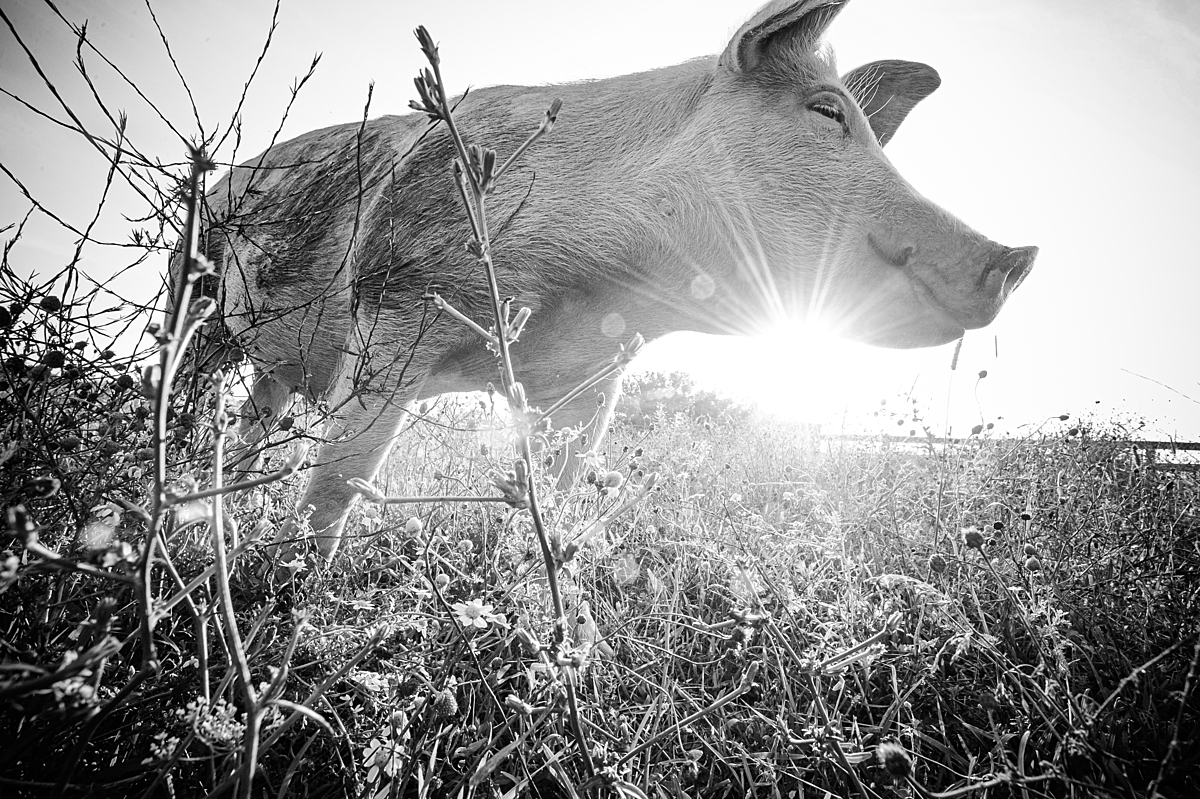
Typical practices in meat production reflect neither the way God values creation nor the Christian task of bringing God’s creatures into the liberation of the kingdom. Not all Christians are required to embody kingdom values of harmony and friendship with animals by abstaining from meat, but it does seem important to avoid when possible practices that are so pointedly antithetical to those values and witness to the alternatives. The duty of the entire Christian community is to act before others in ways that edify and build up, even when and perhaps especially when those practices upend and destabilize socially engrained expectations about how we are to relate to nonhuman creatures.
Learn More
Christopher Steck SJ is a Jesuit priest and the Healey Family Distinguished Professor at Georgetown University where he teaches courses in Christian ethics and moral theology. His research focuses on the intersection of theology, ethics, and the natural world, with a special interest in Catholic teaching on the moral status of animals.
Fr Steck is the author of A Heaven for Animals: A Catholic Case and Why It Matters and has published on ecological ethics and the theological foundations for creation care.
Excepts published with permission from Georgetown University Press.
During Lent, millions of Christians around the world aim to draw closer to the heart of God and celebrate the redemption of the world in Jesus Christ at Easter.
Lent presents an opportunity for introspection, reflection and recapturing a sense of wonder. What better time to discover how faith in Christ shapes our perceptions of animals and how the Gospel message affects all of God’s creatures?
In this extended article, Dr Lisa Warden explores the Biblical mandate to care for God’s creatures, our contemporary treatment of animals and whether Christians may be called to challenge the status quo.
The Revd Janey Hiller, an ordained Anglican minister, recounts her journey towards veganism and how studying Christian perspectives on animals at theological college proved to be a life changing experience.